

Choosing the Right Pickleball Paddle: What Every Player Should Know
Choosing your first pickleball paddle can be surprisingly confusing. Walk into a sports shop or browse online, and you’ll find paddles in different shapes, weights, materials and price ranges. Some promise more power, others focus on control, and plenty claim to offer the best of both.
But the most expensive paddle isn’t necessarily the right one for you.
Whether you’re new to pickleball or have been playing for a while, choosing a pickleball paddle that suits your ability and playing style can make a noticeable difference to how comfortable and confident you feel on court.
This guide explains what to look for, which features matter most and how to avoid spending money on equipment you don’t need.
Why Your Pickleball Paddle Matters
Unlike tennis, where strings provide much of the ball’s response, pickleball uses a solid-faced paddle. Its construction, weight and shape all influence how it feels when making contact with the ball.
The right paddle can help you develop consistency, manage faster exchanges and play more comfortably.
However, a paddle won’t automatically improve your technique. Good footwork, timing and shot selection remain essential, regardless of the equipment you’re using.
For beginners, comfort and control are usually more important than generating maximum power. As your skills develop, you may find that certain paddle characteristics better complement your game.
1. Understand Pickleball Paddle Weight
Weight is one of the first things to consider when choosing a pickleball paddle.
Most adult paddles weigh approximately 200–255 grams, although lighter and heavier models are available.
The differences might seem small, but they can affect how quickly you move the paddle and how it feels during longer matches.
Lightweight Paddles
Generally below 215 grams.
Lighter paddles are easier to manoeuvre and may appeal to players who value quick reactions at the kitchen line.
They can also feel more comfortable for players who prefer less overall paddle weight.
However, lighter models may provide less stability against hard-hit balls and require more effort to generate pace.
Midweight Paddles
Approximately 215–235 grams.
Midweight paddles offer a balance between manoeuvrability, stability and power.
For many beginners and recreational players, this is a practical starting point because it allows them to explore different shots without committing to an extreme paddle characteristic.
Heavyweight Paddles
Generally above 235 grams.
Heavier paddles can provide greater stability and momentum through contact, which some players prefer for drives and powerful shots.
The trade-off is that they may feel slower during quick exchanges or become tiring over extended play.
Tip: Don’t choose based on weight alone. Two paddles with identical overall weights can feel different because of how their weight is distributed.
2. Choose the Right Paddle Shape
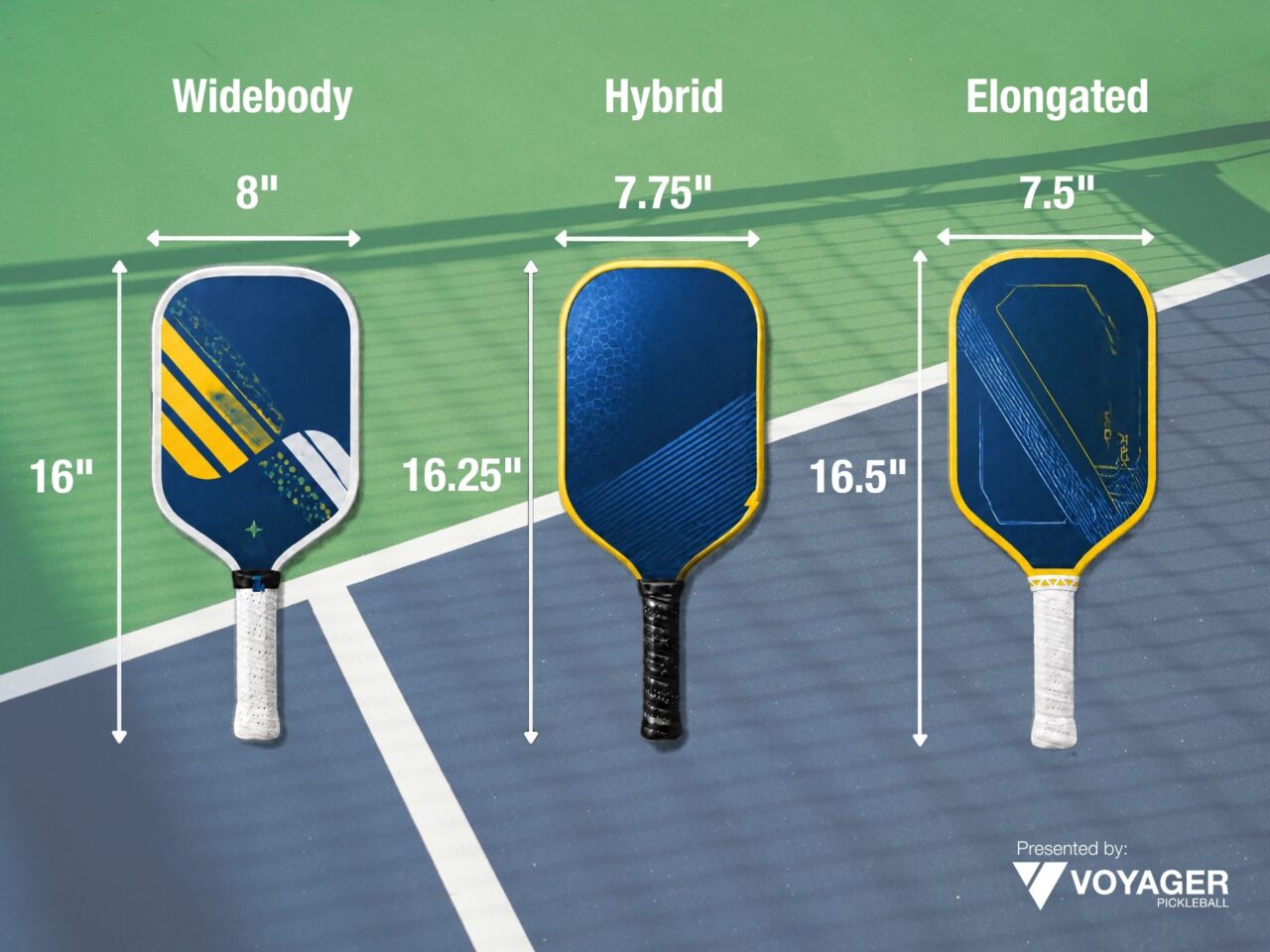
Pickleball paddles come in several shapes, with standard, elongated and wider-body designs among the most common.
Each shape offers different advantages.
Standard-Shaped Paddles
Standard paddles generally provide a balanced combination of reach, control and manoeuvrability.
They’re a good starting point for players who are still developing their technique or haven’t settled on a particular playing style.
Elongated Paddles
Elongated paddles have a longer face and typically offer additional reach.
This can be useful when covering the court, particularly for players who prefer aggressive baseline shots or want extra reach during volleys.
However, the narrower face may be less forgiving when contact is off-centre.
Wide-Body Paddles
Wider paddles generally offer a larger hitting area across the face, which can make them more forgiving for developing players.
They can be particularly helpful for beginners who are working on consistent contact.
For someone purchasing their first paddle, a standard or wider-body design is often worth trying before moving to a specialised shape.
3. Pickleball Paddle Materials: What’s the Difference?
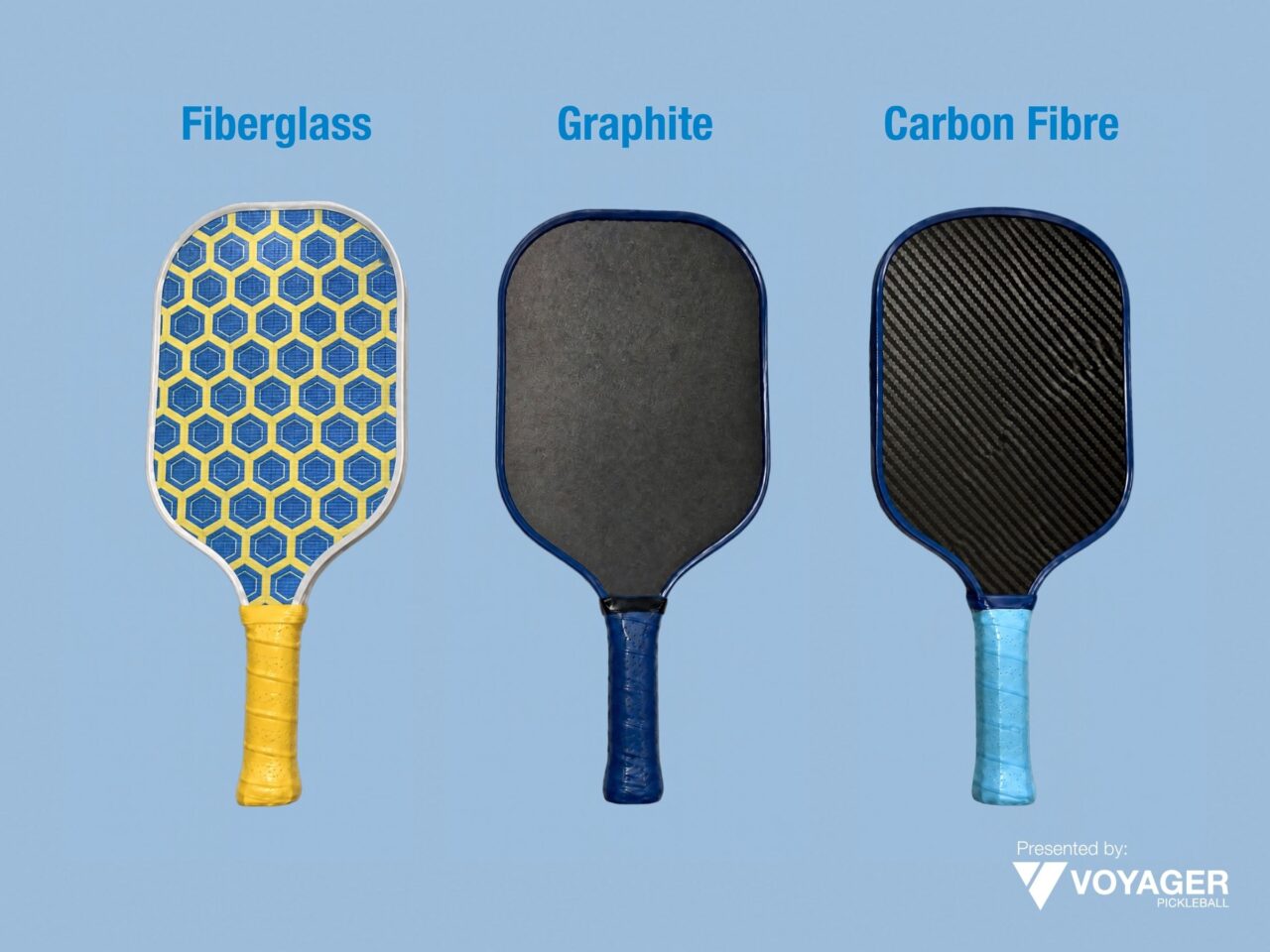
The materials used in a pickleball paddle influence its feel, durability and playing characteristics.
Modern paddles typically combine a solid core with a composite hitting surface.
Fibreglass Paddles
Fibreglass-faced paddles can provide a lively response and are available across a range of price points.
Some players enjoy their feel when hitting drives and attacking shots.
However, performance varies significantly between models, so it’s worth testing how easily you can control softer shots.
Carbon Fibre Paddles
Carbon fibre is common in modern pickleball paddles, particularly models designed for players seeking control and consistent ball response.
Some carbon fibre surfaces provide a firmer feel, while others are designed to offer more dwell time and spin potential.
The material alone doesn’t determine performance. Core construction, face texture and overall paddle design also matter.
Graphite Paddles
Graphite-faced paddles are often relatively lightweight and can offer a responsive feel.
They’re available in beginner, intermediate and advanced models.
When comparing graphite and carbon fibre, remember that manufacturers sometimes use these terms differently. It’s more useful to assess the paddle’s actual playing characteristics than rely entirely on the material listed on the label.
4. Core Thickness: Power or Control?
Another important feature is the thickness of the paddle’s core.
Many paddles use a polymer honeycomb core, with common thicknesses around 13 mm, 14 mm and 16 mm.
Thinner Cores
Thinner paddles often have a more direct, responsive feel and may appeal to players who prefer a faster ball response.
They can be suitable for attacking styles, although they may require greater precision when playing softer shots.
Thicker Cores
Thicker paddles, particularly 16 mm models, are often associated with a more controlled feel and greater stability.
This can be useful for dinks, resets and defensive play.
However, modern paddle technology has made these distinctions less predictable. Some thicker paddles generate considerable power, while certain thinner models offer excellent control.
The best approach is to try the paddle rather than assume its performance based on thickness alone.
5. Find the Right Grip Size
Grip size is easy to overlook, but it plays an important role in paddle comfort and handling.
A grip that’s too large may make it harder to adjust your hand position, while one that’s too small may encourage excessive gripping.
Common pickleball grip circumferences are approximately 4 to 4.5 inches, although sizes vary between manufacturers.
How to Check Your Grip
Hold the paddle naturally, as though you’re preparing to hit a forehand.
Your fingers should wrap comfortably around the handle without forcing your hand into an awkward position.
You should be able to maintain a secure grip without squeezing excessively.
If you’re between sizes, a smaller grip can often be increased using an overgrip.
Handle Length Also Matters
Players who use a two-handed backhand may prefer a longer handle.
Others might favour a shorter handle that allows more space for the paddle face.
If you’re transitioning from tennis to pickleball, testing different handle lengths can help you find a familiar and comfortable setup.
6. Consider Your Playing Style
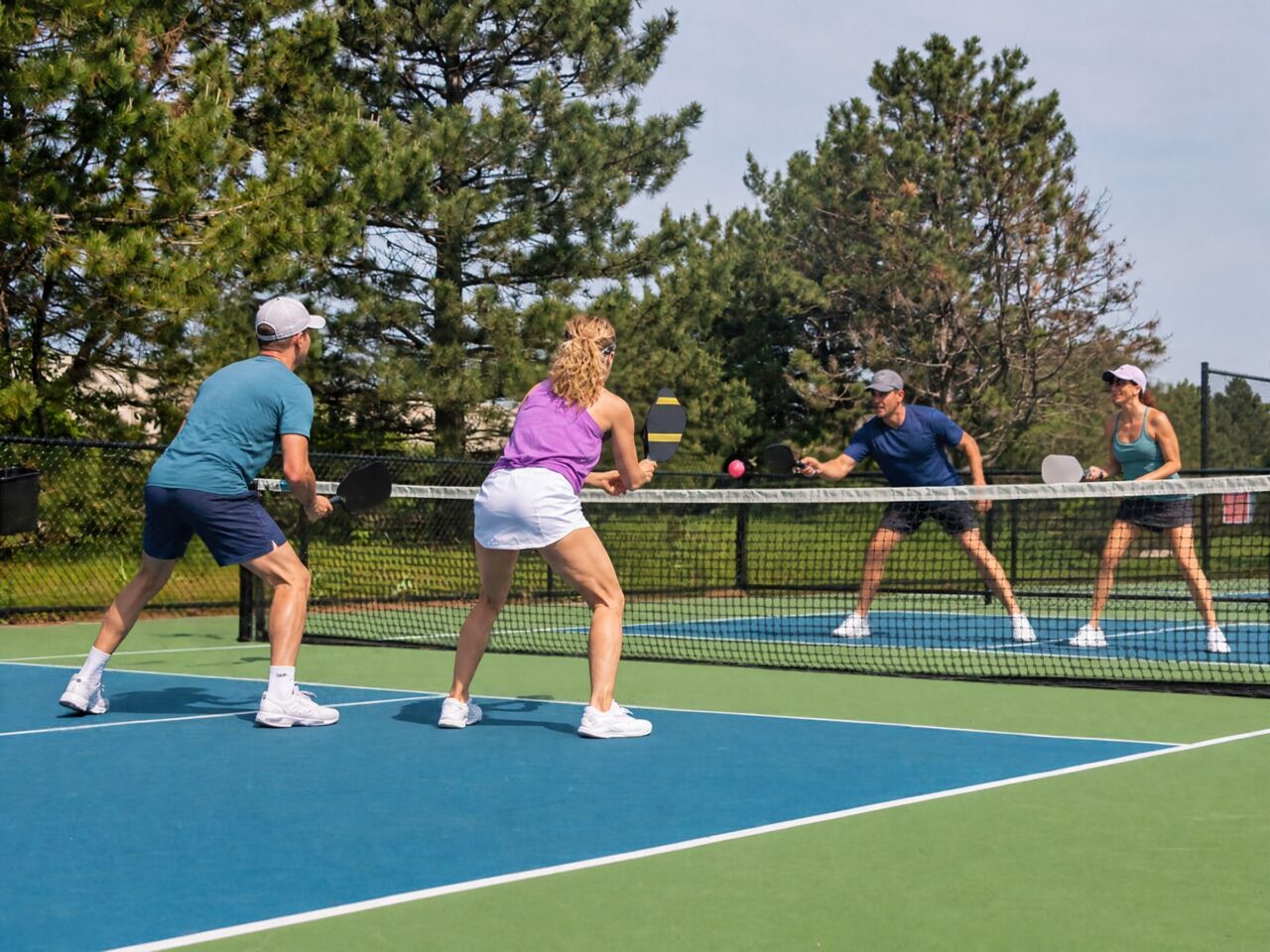
As you gain experience, you’ll start recognising which shots feel most natural and where you want more support from your equipment.
| Playing style | Paddle characteristics worth trying |
| Beginner | Midweight, standard or wide-body shape, comfortable grip |
| Control-focused | Stable paddle, forgiving face, often a thicker core |
| Power-focused | Paddle with good swing momentum and a responsive face |
| Fast net player | Manoeuvrable design with manageable swing weight |
| Tennis crossover | Longer handle or elongated shape, depending on preference |
| All-round player | Balanced paddle with a combination of control and power |
These are starting points rather than strict rules.
For example, an aggressive player may still prefer a control-oriented paddle because it helps them manage the power they already generate.
Similarly, a player who struggles to produce pace might benefit from a more responsive paddle.
7. How Much Should You Spend on a Pickleball Paddle?
Pickleball paddles are available across a wide price range in Australia.
As a general guide:
- Under $60: Basic recreational paddles and starter options
- 60–150: A broad range of beginner and intermediate paddles
- 150–250: More specialised constructions and performance-focused options
- Above $250: Premium paddles, often aimed at experienced or competitive players
These are approximate price bands, not fixed indicators of quality.
If you’re just starting, there’s usually little reason to purchase a premium paddle immediately.
A comfortable, durable midrange paddle can be more than sufficient while you develop your skills.
As you become more experienced, you’ll have a clearer understanding of whether you need additional control, power, reach or manoeuvrability.
8. Check Whether Your Paddle Is Approved for Competition
If you plan to enter sanctioned pickleball tournaments, check the equipment requirements before buying.
Some competitions require paddles to appear on an approved equipment list, and the applicable rules can depend on the tournament and governing organisation.
A paddle being advertised as suitable for competitive play doesn’t automatically mean it’s approved for every event.
Check the current tournament regulations and relevant equipment approval requirements before making a purchase.
This is particularly important for newer paddle models, where approval status or equipment standards may change.
Common Mistakes When Buying a Pickleball Paddle
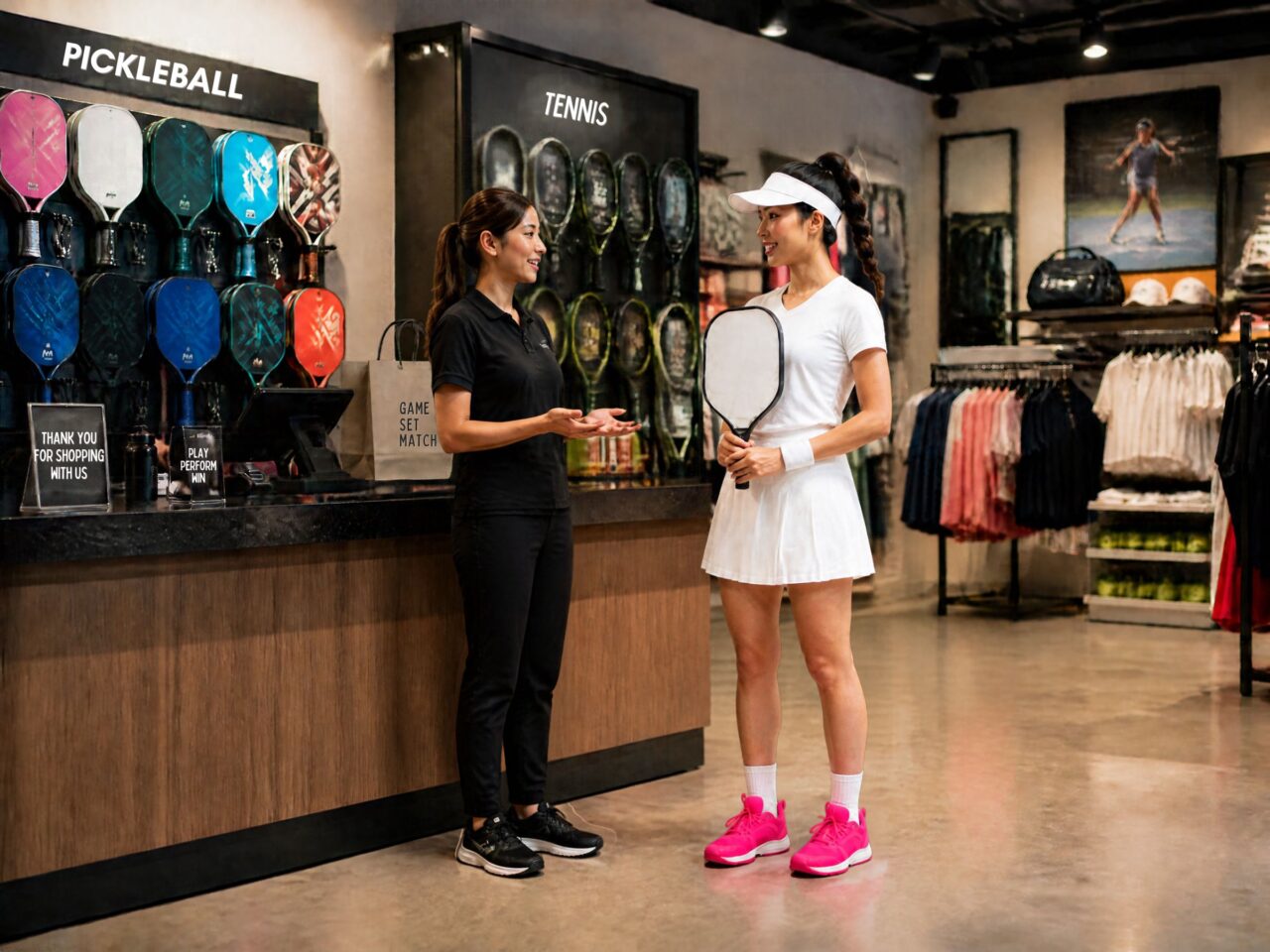
Choosing a paddle doesn’t need to be complicated, but there are a few mistakes worth avoiding.
Buying purely for power
A powerful paddle might sound appealing, but it can make softer shots more difficult to control if you’re still developing your touch.
Choosing what a professional player uses
Professional players select equipment based on their technique, physical characteristics and playing style. The same paddle may not suit a beginner.
Ignoring grip comfort
An uncomfortable handle can affect how confidently you hold and manoeuvre the paddle.
Assuming expensive means better
Premium materials and advanced construction don’t guarantee a better experience for every player.
Not trying different paddles
Specifications are useful, but they can’t fully explain how a paddle will feel during a rally.
Whenever possible, test several options before deciding.
Should Beginners Buy Their Own Pickleball Paddle?
If you’re attending your first pickleball session, you may not need to buy a paddle straight away.
Using available equipment during introductory sessions can help you understand the game and identify what feels comfortable.
After a few sessions, you’ll likely have a better sense of the paddle weight, shape and grip you prefer.
For beginners, the most important thing is getting on court regularly and developing confidence with the basic shots.
Equipment can be upgraded as your needs change.
Try Pickleball with Voyager Tennis
Finding the right pickleball paddle is only one part of enjoying the sport.
Learning proper technique, developing consistent rallies and understanding court positioning can make a much greater difference to your progress.
At Voyager Tennis, players can explore pickleball coaching and court hire opportunities.
Whether you’re trying pickleball for the first time or looking to improve your game, regular coaching and matchplay can help you become more comfortable on court.
Players interested in testing their skills can also explore Voyager’s pickleball competitions.
Which Pickleball Paddle Is Right for You?
The right pickleball paddle depends on your experience, comfort and playing preferences.
Beginners will often benefit from a forgiving, balanced paddle that makes it easier to develop consistency. More experienced players may prefer specific characteristics that complement their strengths or address weaknesses in their game.
Before purchasing, consider how the paddle feels in your hand, whether you can control softer shots and how comfortably you can react during faster rallies.
A good paddle should support the way you play, not force you to change your game to suit the equipment.
And if you’re still unsure, spend some time on court before making your decision.
Ready to put your pickleball skills into practice?
Share This
Related Posts