

Tennis Coordination: Activities That Improve Coordination in Children
Key Takeaways
- Tennis coordination develops through fun, age-appropriate games and activities rather than repetitive drills.
- Tennis improves hand-eye coordination, balance, agility, reaction time and body control.
- Developing coordination at a young age helps children perform better in tennis and many other sports.
- Tennis Australia’s Hot Shots program uses modified equipment to make learning easier and more enjoyable for children.
- Regular coaching provides structured activities that help children build confidence while improving their coordination.
- A free trial lesson is a great way for children to experience tennis and begin developing lifelong movement skills.
Strong coordination is one of the most important foundations for children’s physical development. It influences how they run, jump, catch, throw and move confidently in everyday life, not just in sport.
One of the reasons tennis is such a valuable activity for young children is that every lesson naturally develops coordination through movement, balance and ball skills. Rather than focusing solely on learning forehands and backhands, junior coaching helps children improve the fundamental movement patterns that support success in tennis and many other sports.
Whether your child is picking up a racquet for the first time or already enjoys playing, improving tennis coordination can help them become a more confident and capable athlete.
Why Coordination Matters in Tennis
Coordination is the ability to move different parts of the body smoothly and efficiently while responding to changing situations.
In tennis, children constantly coordinate their eyes, hands, feet and body position while tracking a moving ball.
Every rally requires players to:
- Watch the ball carefully
- Move into position
- Balance while swinging
- Time their movements correctly
- Recover quickly for the next shot
These skills develop naturally through regular coaching and become stronger with consistent practice.
The Tennis Hot Shots program used in Voyager Tennis’ Junior Coaching Program is specifically designed to improve coordination using smaller courts, lighter racquets and slower balls, allowing children to learn movement skills in a fun and achievable way.
Ball Tracking Games
One of the first coordination skills children develop is learning to track the ball.
Simple activities encourage players to watch the ball from the moment it leaves the coach’s hand until it reaches the racquet.
These games improve:
- Visual tracking
- Hand-eye coordination
- Reaction speed
- Timing
As children become more confident tracking the ball, they begin making cleaner contact and longer rallies.
Catch and Throw Activities
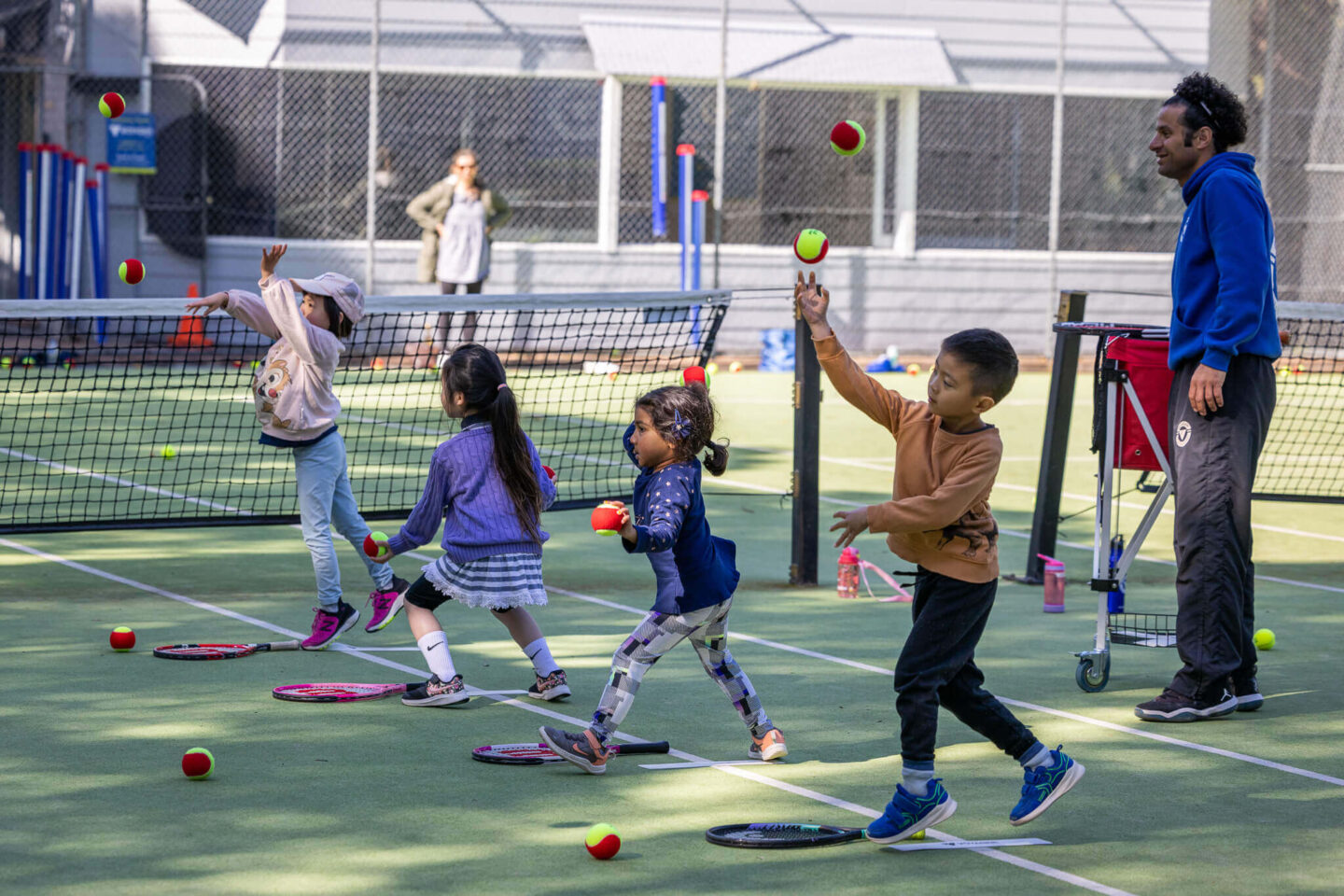
Before children consistently hit a tennis ball, they often begin by catching and throwing.
Although these activities appear simple, they teach important movement skills including:
- Judging distance
- Timing movements
- Coordinating both hands
- Developing body awareness
Many Tennis Hot Shots activities include catching games because they provide an excellent foundation for later racquet skills while keeping lessons enjoyable.
Agility and Footwork Drills
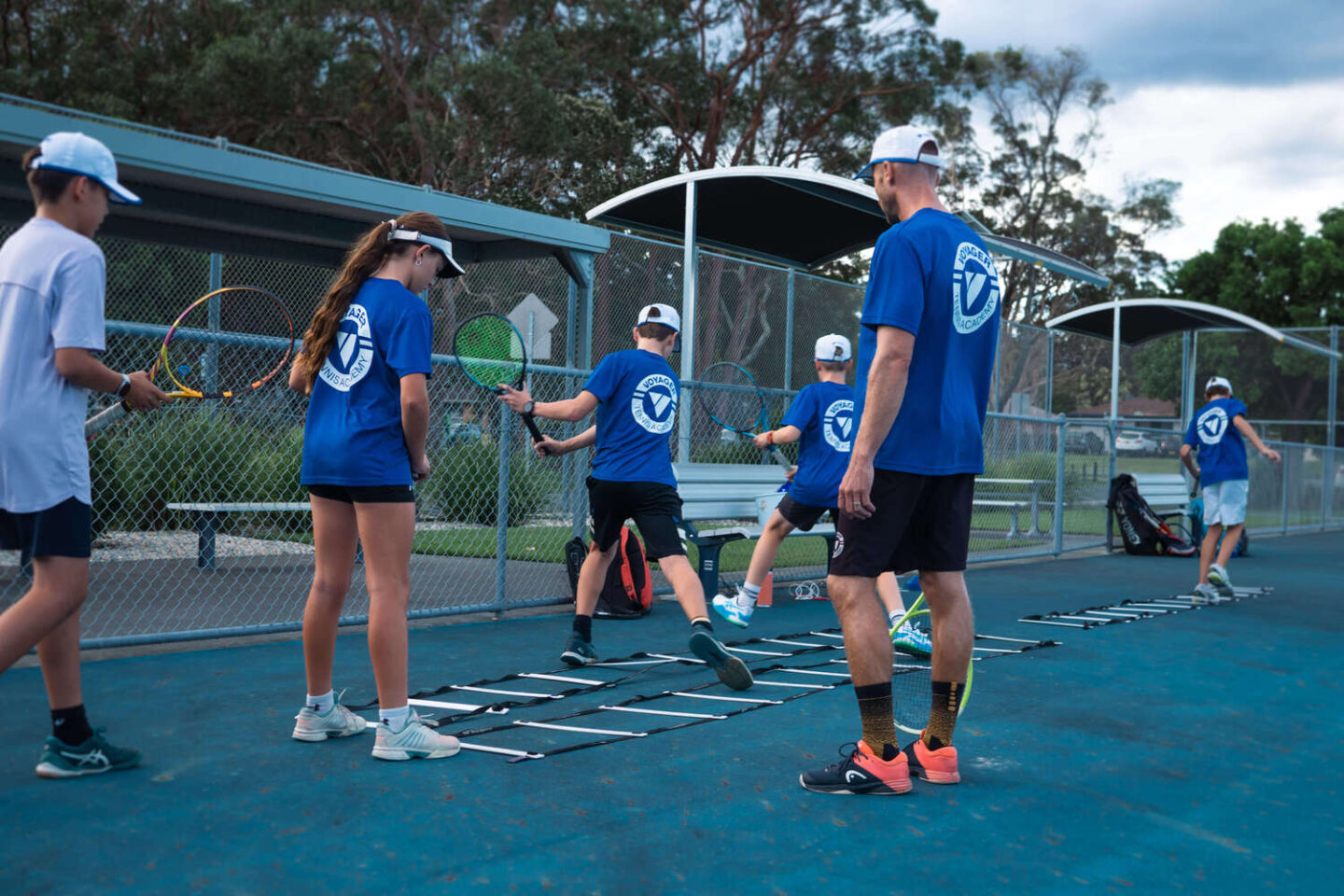
Good coordination starts with good movement.
Children participate in activities that encourage them to move quickly in different directions while maintaining balance and control.
Examples include:
- Ladder drills
- Cone races
- Side shuffles
- Forward and backward running
- Reaction games
These exercises improve:
- Balance
- Agility
- Speed
- Body control
- Court movement
Better footwork helps children reach the ball earlier, making tennis feel easier and more enjoyable.
Racquet and Ball Control Activities
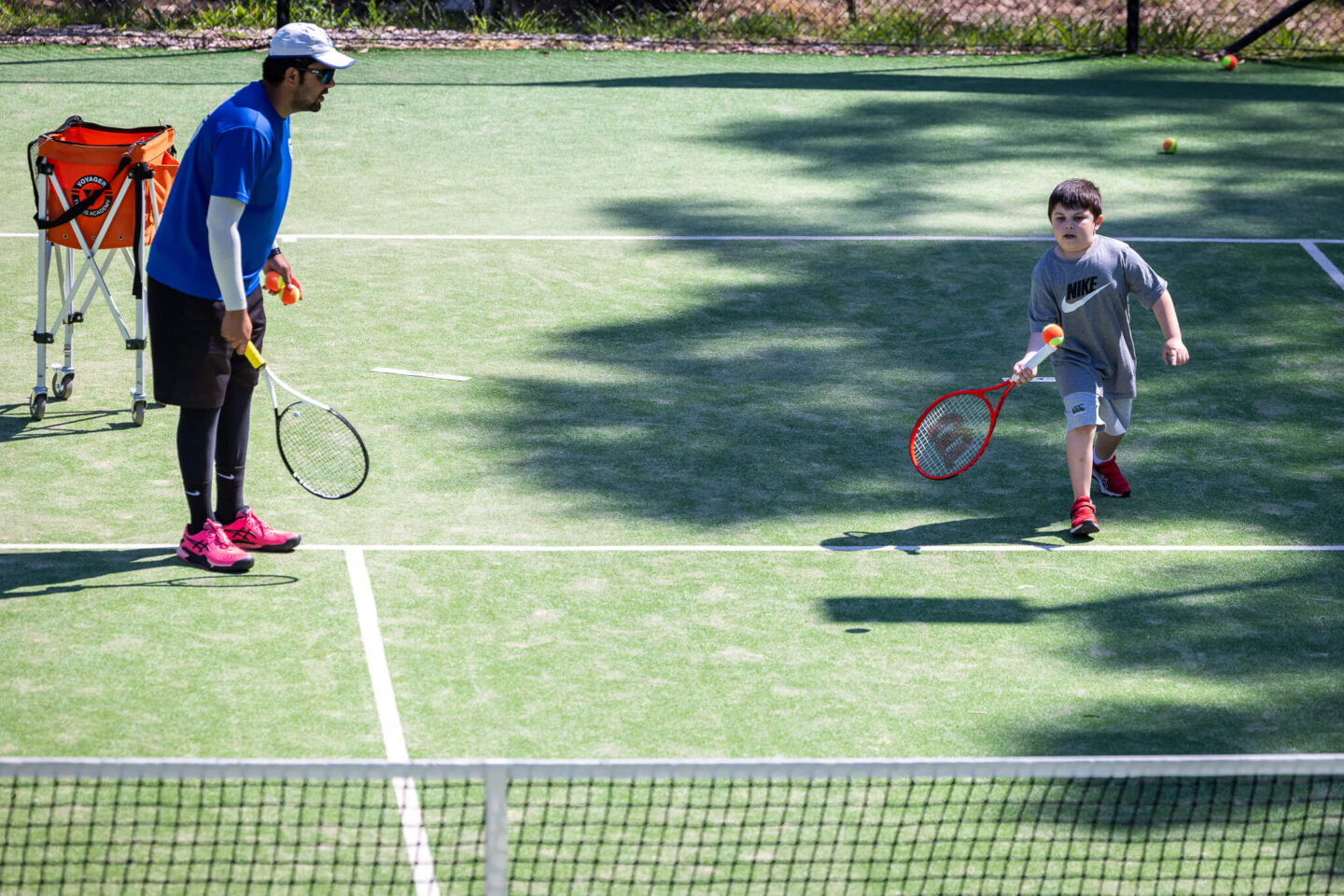
Learning to control both the racquet and ball is another important part of tennis coordination.
Coaches introduce simple activities such as:
- Bouncing the ball on the racquet
- Rolling the ball around cones
- Gentle tapping exercises
- Target hitting games
These drills teach children how to control the racquet face while improving hand-eye coordination and touch.
Rather than aiming for power, beginners learn consistency and control first.
Rally-Based Learning
As coordination improves, children begin rallying with coaches and other players.
Rallying develops multiple coordination skills simultaneously because children must:
- Watch the incoming ball
- Move their feet
- Prepare the racquet
- Time their swing
- Recover for the next shot
This combination of movement and decision-making helps develop both physical coordination and court awareness.
Using slower balls and modified courts allows children to experience longer rallies, helping them build confidence while improving their movement patterns.
Learning Through Play
Children often develop coordination most effectively when they’re having fun.
That’s why many junior tennis sessions include games that disguise skill development as play.
Activities may involve:
- Relay races
- Team challenges
- Target games
- Obstacle courses
- Movement competitions
While children enjoy the activities, they’re also improving:
- Agility
- Balance
- Coordination
- Reaction time
- Social skills
- Confidence
This “learning through play” philosophy is a core part of the Tennis Hot Shots program, helping children build motor skills while developing a love for tennis.
Coordination Benefits Beyond Tennis
The benefits of improving tennis coordination extend well beyond the court.
Children with strong coordination often find it easier to participate in other sports such as cricket, football, basketball and swimming.
They may also develop:
- Better posture
- Greater body awareness
- Improved confidence
- Faster reaction times
- Better overall fitness
These physical skills support healthy development throughout childhood while encouraging an active lifestyle.
Why Structured Coaching Makes a Difference
Although children can practise basic coordination activities at home, structured coaching provides progressive challenges that match each child’s age and ability.
Qualified coaches know when to introduce new activities and how to adjust them as children improve.
This helps children continue developing without becoming frustrated or overwhelmed.
Regular participation in junior coaching also encourages consistency, allowing coordination to improve naturally over time.
Conclusion
Developing coordination is one of the greatest long-term benefits of learning tennis.
Through games, movement activities and age-appropriate coaching, children improve balance, agility, reaction time and hand-eye coordination while building confidence on the court. These skills don’t just make them better tennis players—they help them become stronger, more capable athletes in every aspect of life.
With supportive coaching and consistent practice, tennis provides an enjoyable way for children to develop the movement skills they’ll benefit from for years to come.
Book a Free Trial
If you’d like your child to experience the benefits of improved tennis coordination, there’s no better way than stepping onto the court.
Book a free tennis trial and let your child experience Voyager Tennis’ fun, supportive coaching environment. Our experienced coaches use age-appropriate activities that develop coordination, confidence and fundamental movement skills while helping children discover a lifelong love of tennis. Whether they’re complete beginners or ready to build on existing skills, every lesson is designed to help them grow through play and positive coaching.
Share This
Related Posts