
What Is High Performance Tennis Coaching?
A player can have a reliable forehand, a strong serve and plenty of experience on court, yet still struggle to turn close matches into wins.
Sometimes the problem is shot selection. Other times, it’s movement, consistency under pressure or difficulty adjusting when an opponent changes tactics.
These are the kinds of challenges that high performance tennis coaching aims to address.
For players who want to compete seriously, regular tennis lessons may eventually need to become more structured. Training starts to focus on how technical skills hold up during matches, how players manage demanding rallies and what they need to improve to compete at a higher level.
But what does high performance tennis actually involve, and how can players tell when they’re ready for it?
What Is High Performance Tennis?
High performance tennis is a structured approach to developing players who want to improve their competitive standard.
Training typically combines technical coaching, tactical development, physical preparation, match play and performance review. The emphasis is on developing skills that players can consistently use during competition.
For example, a player might have an excellent forehand during a feeding drill but struggle to execute the same shot when an opponent hits deep into the court.
A high performance coach may examine the player’s recovery position, preparation time, footwork and shot selection to understand why the stroke becomes less reliable during a match.
The goal is to identify what is limiting performance and develop training that addresses those weaknesses.
High performance coaching is commonly associated with competitive junior players, although the same principles can apply to adults competing at an advanced level.
How Is High Performance Coaching Different From Regular Tennis Lessons?
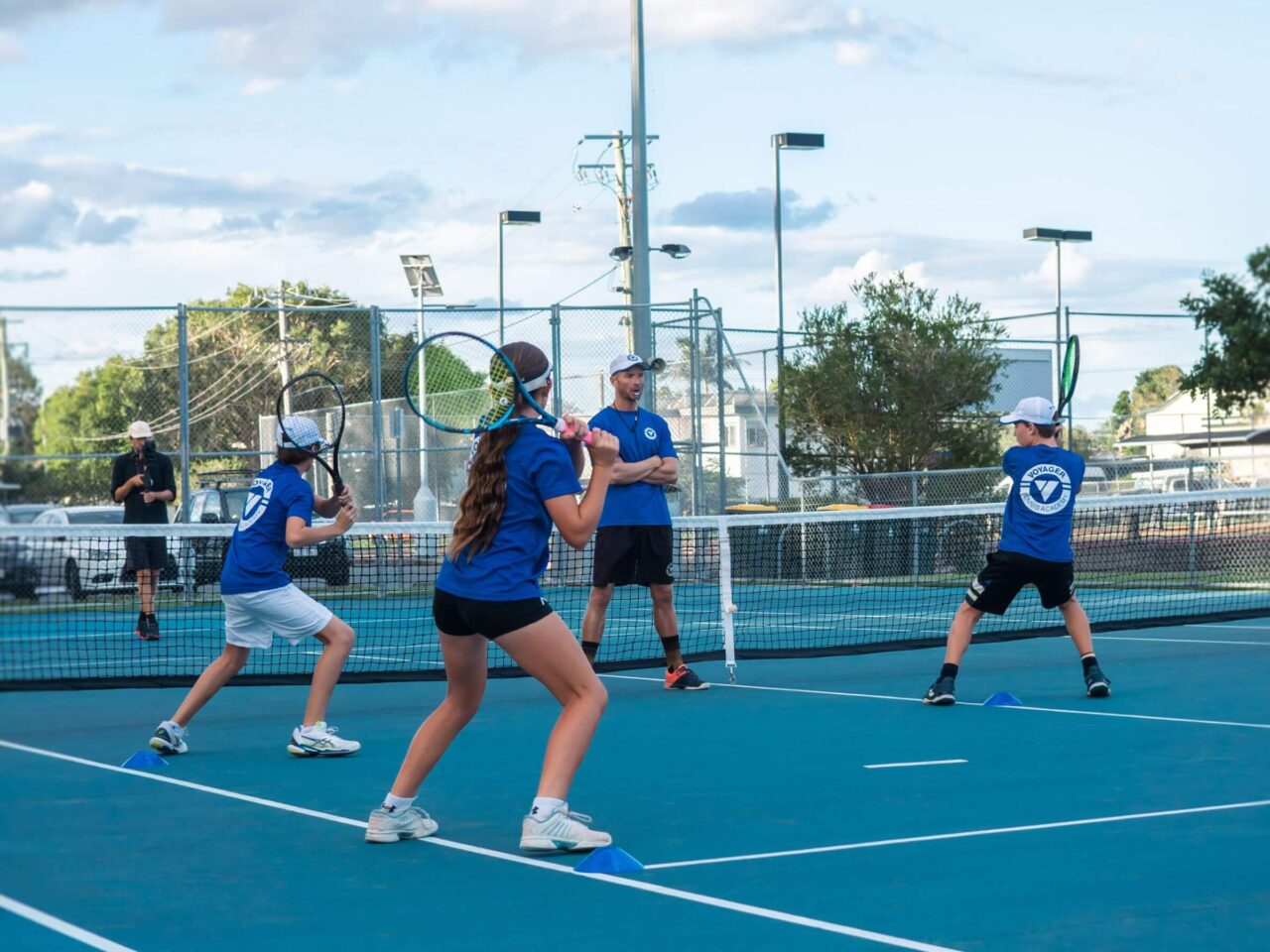
Both types of coaching can develop technique and improve a player’s understanding of tennis. The main difference is usually the training objective and the level of structure involved.
Recreational lessons may focus on learning strokes, improving consistency, enjoying rallies and developing confidence.
High performance training places greater emphasis on competitive outcomes and the skills required to achieve them.
| Regular tennis coaching | High performance tennis coaching |
| Builds foundational skills | Refines skills for competitive situations |
| Often focuses on general improvement | Targets specific performance limitations |
| Uses drills and recreational match play | Incorporates demanding, match-specific scenarios |
| Flexible participation goals | More structured training and competition planning |
| Progress measured through skill development | Progress also assessed through match performance |
This doesn’t mean high performance coaching is automatically better. The right approach depends on the player’s experience, motivation and goals.
A beginner learning to rally consistently needs a different training environment from a junior preparing for regular tournaments.
What Does High Performance Tennis Training Include?
A well-designed high performance tennis program considers several aspects of a player’s game. Improving one stroke can help, but competitive performance depends on how different skills work together.
1. Technical Development Under Pressure
At an advanced level, players generally know how to execute the main tennis strokes. The challenge is maintaining technique when the ball arrives faster, lands deeper or forces them out of position.
Coaches may work on serve placement, return technique, contact points, footwork patterns and recovery after each shot.
Rather than repeating the same stroke without variation, players practise responding to different ball speeds, spins and court positions.
For instance, a player working on their second serve might practise hitting to specific targets, then repeat the exercise under a simulated break-point situation.
This helps connect technical improvement with competitive demands.
2. Tactical Awareness and Match Strategy
Tennis involves constant decision-making.
Players must recognise when to defend, when to attack and how to construct points against different opponents.
High performance coaching helps players understand patterns of play and develop strategies suited to their strengths.
A coach might examine whether a player attacks too early, repeatedly targets an opponent’s stronger wing or struggles to recognise short balls.
Training can then include specific scenarios, such as constructing a point using a wide serve followed by an attacking forehand.
The objective is to help players make better decisions during rallies rather than relying entirely on instinct.
3. Physical Conditioning and Movement
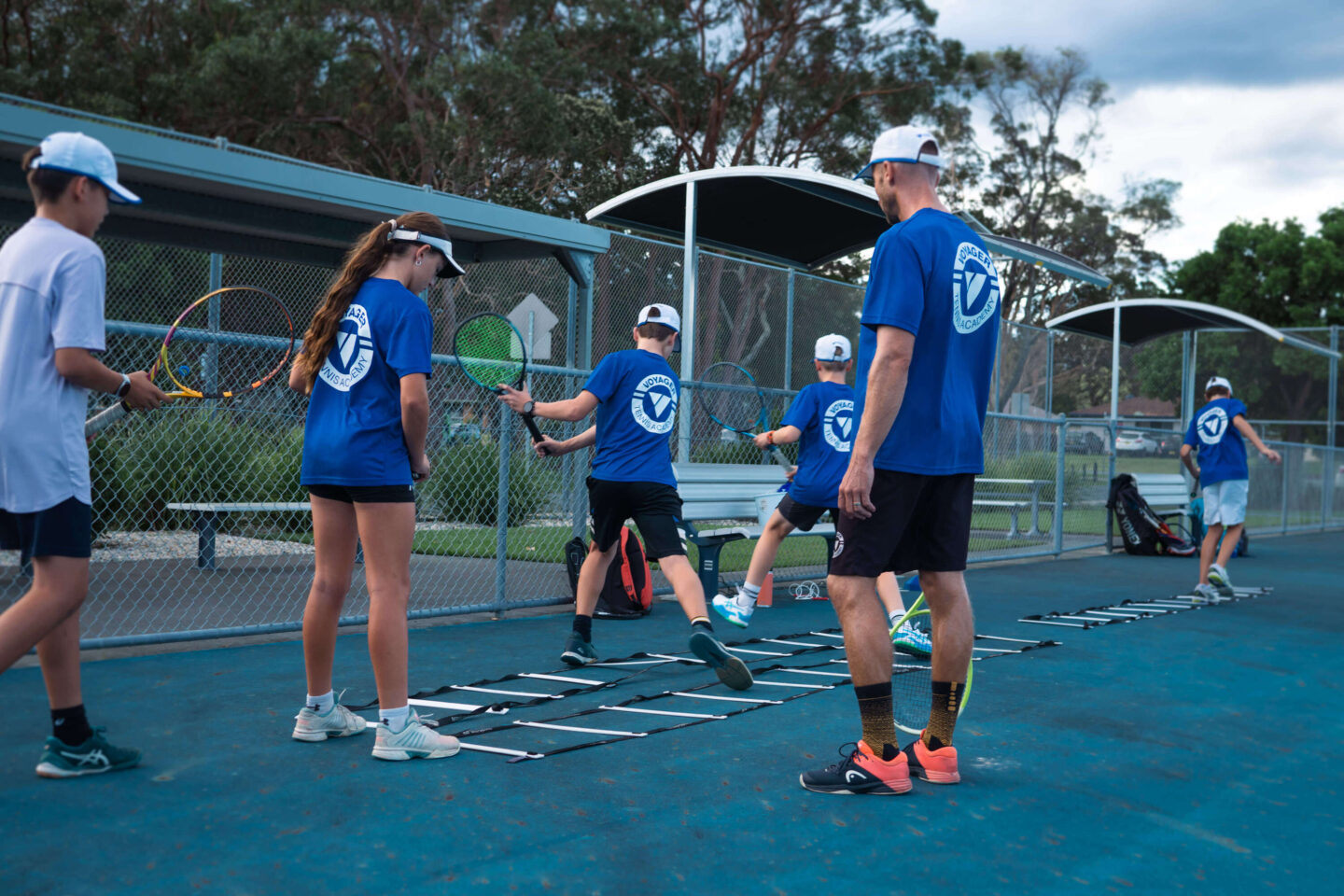
Tennis requires repeated acceleration, deceleration, changes of direction and recovery between shots.
A player may have strong technique but struggle to maintain it when physically tired or forced to defend wide balls.
High performance tennis training therefore considers movement efficiency, strength, coordination, speed and endurance.
For junior players, physical preparation should also account for growth, maturation and training load. Younger athletes need developmentally appropriate exercises rather than simply copying professional players’ gym routines.
The aim is to develop physical qualities that support tennis performance while managing injury risk.
4. Mental Skills and Competitive Resilience
Even experienced players can struggle to perform consistently under pressure.
A player might serve confidently during practice but become hesitant when facing a break point. Another might lose concentration after making several unforced errors.
High performance coaching addresses these situations through match simulations, routines and reflection.
Players can learn to manage their attention between points, respond constructively to mistakes and maintain a tactical plan when a match becomes difficult.
Mental preparation is an ongoing part of competitive development. It works alongside technical and physical training rather than replacing either.
Why Match Play Matters in High Performance Tennis
Hitting hundreds of balls during practice can improve consistency, but match play reveals whether those improvements transfer into competition.
During matches, players must make decisions without knowing exactly what shot comes next. They also need to manage scoring pressure, changing momentum and unfamiliar opponents.
Coaches can use match play to identify recurring patterns.
For example, a junior player may consistently lose points after hitting a short second serve. Another might struggle to convert attacking opportunities because they approach the net at the wrong time.
These observations help coaches design more targeted training sessions.
Match analysis can also reveal progress that isn’t immediately visible in tournament results. A player might lose a close match but demonstrate better return positioning, improved shot selection or fewer errors during longer rallies.
These details provide useful information for the next stage of development.
Who Is High Performance Tennis Coaching For?
High performance coaching is generally suited to players who already have a solid technical foundation and want to develop their competitive game.
This may include:
- Junior players participating regularly in tournaments.
- Players preparing for higher-level school, state or national competitions.
- Competitive players looking to improve their UTR rating.
- Athletes considering college tennis or other advanced playing pathways.
- Players willing to commit to structured training and regular match play.
Age alone doesn’t determine readiness.
A younger player who enjoys competition and demonstrates consistent commitment may be ready for a development-focused performance squad. An older player with limited competitive experience might benefit more from building match fundamentals first.
Motivation matters as much as ability.
A player who enjoys tennis but doesn’t want the demands of frequent training and tournaments may be better suited to recreational or intermediate coaching.
How Do Coaches Measure Progress?

Tournament wins and rankings are useful indicators, but they don’t provide a complete picture of development.
A player can improve substantially without immediately achieving better results, particularly when competing against stronger opponents.
High performance coaches may assess progress through technical consistency, tactical execution, physical development and match performance.
For example, a coach might track whether a player is winning more points behind their second serve, making fewer unforced errors during neutral rallies or improving their ability to defend and recover.
Regular reviews help players understand which areas are improving and where training should focus next.
A structured approach also makes it easier to adjust goals as the player’s ability, competition schedule and circumstances change.
High Performance Tennis at Voyager Tennis
Voyager Tennis offers a Performance Squad Program designed for junior players progressing towards competitive tennis.
The program incorporates technical, tactical, psychological and physical development, alongside intensive squad training and tournament preparation.
Voyager also describes player planning, sports psychology education, physical screening and parent education as components of its broader performance pathway.
For players pursuing advanced competitive development, Voyager has a dedicated High Performance Program at Tweed Heads led by Luke Bourgeois.
This program is designed for committed players aiming to progress towards higher competitive, national or professional levels. Its emphasis is on long-term athlete development and structured performance training.
Players at an earlier stage can explore Voyager’s junior tennis coaching, which provides a pathway from foundational skills towards selective and performance programs.
Is High Performance Tennis the Right Next Step?
Moving into high performance tennis coaching is a significant decision for players and families.
More training hours alone don’t guarantee better results. The quality of practice, appropriate competition, recovery and the player’s willingness to learn all influence long-term development.
Before committing to a performance program, it’s worth considering whether the player enjoys competition, is motivated to train regularly and is ready for the expectations of a more structured environment.
Parents should also discuss training schedules, school commitments and development goals with the coach.
For players who are ready, high performance tennis offers an opportunity to understand their game in greater detail and work towards clear competitive objectives.
Interested in taking the next step? Explore Voyager Tennis’s Performance Program to learn about its coaching approach and competitive development pathways.
Share This
Related Posts