
Pickleball Rules Every Beginner Should Know: A Complete Guide to Scoring and Serving
Pickleball is relatively easy to start playing, but keeping score can take a little longer to understand.
If you’ve watched a doubles match and wondered why someone called out three numbers before serving, you’re not alone. Unlike tennis, traditional pickleball scoring depends on which team is serving, which player is serving and whether that team has earned the right to score.
Once you understand those details, the rest of the game becomes much easier to follow.
This guide explains the essential pickleball rules, with particular attention to serving, doubles scoring, player positioning, faults and the situations that frequently confuse beginners.
How Does Pickleball Scoring Work?
Under traditional side-out scoring, only the serving player or team can earn points.
If the receiving team wins a rally, they don’t receive a point. Instead, they gain the serve or advance towards gaining it, depending on whether the game is singles or doubles.
A standard game is usually played to 11 points, and the winner must finish at least two points ahead.
For example, a game cannot finish 11–10. Play continues until one side establishes a two-point advantage, such as 12–10 or 13–11.
Some competitions use games to 15 or 21 points, while others use rally scoring. Always check the format before a match.
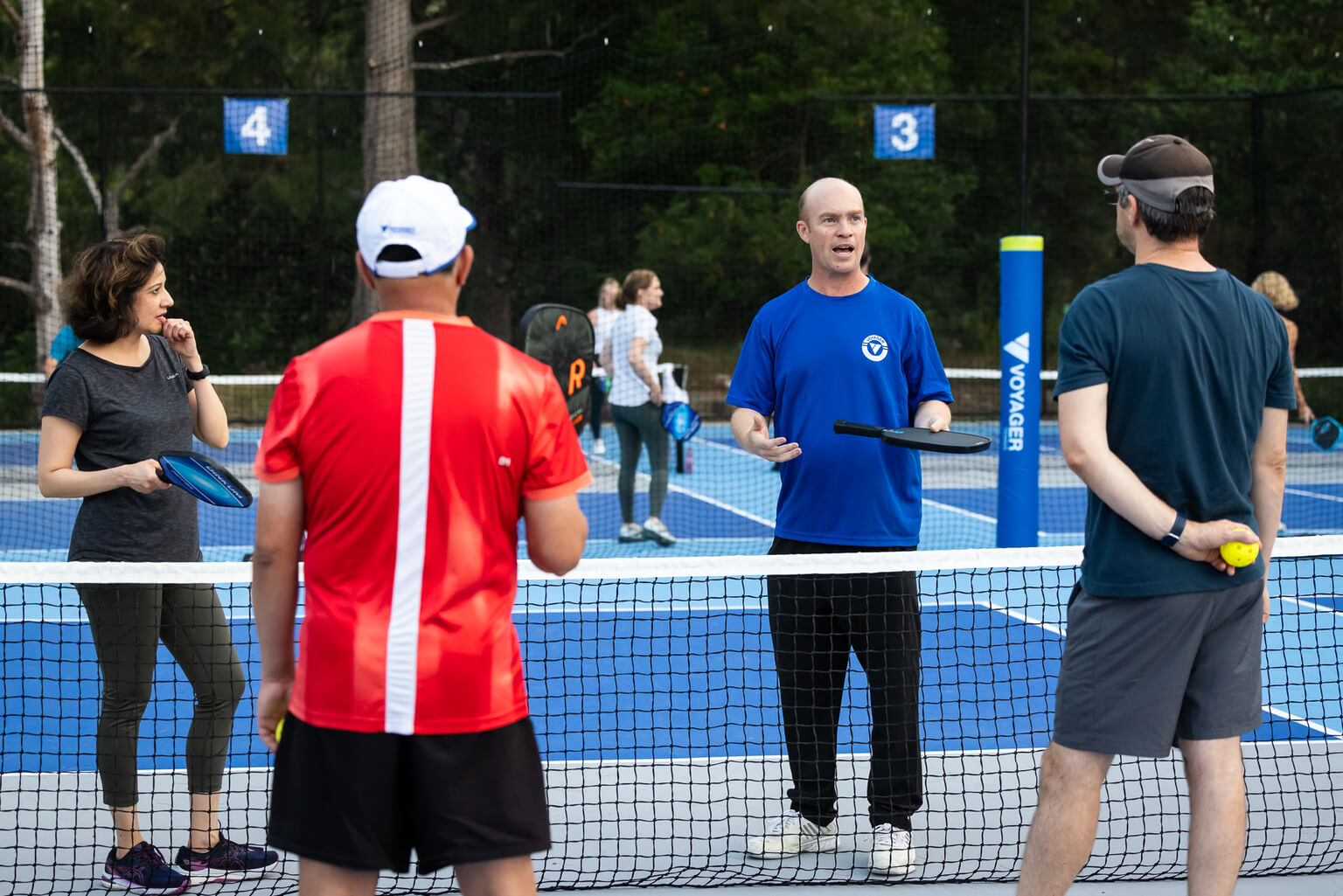
Understanding the scoring system is easier once you’ve practised it during a real game. If you’re new to the sport, Voyager’s pickleball coaching programs provide opportunities to work on serving, scoring, positioning and match play with guidance from a coach.
How to Read a Pickleball Doubles Score
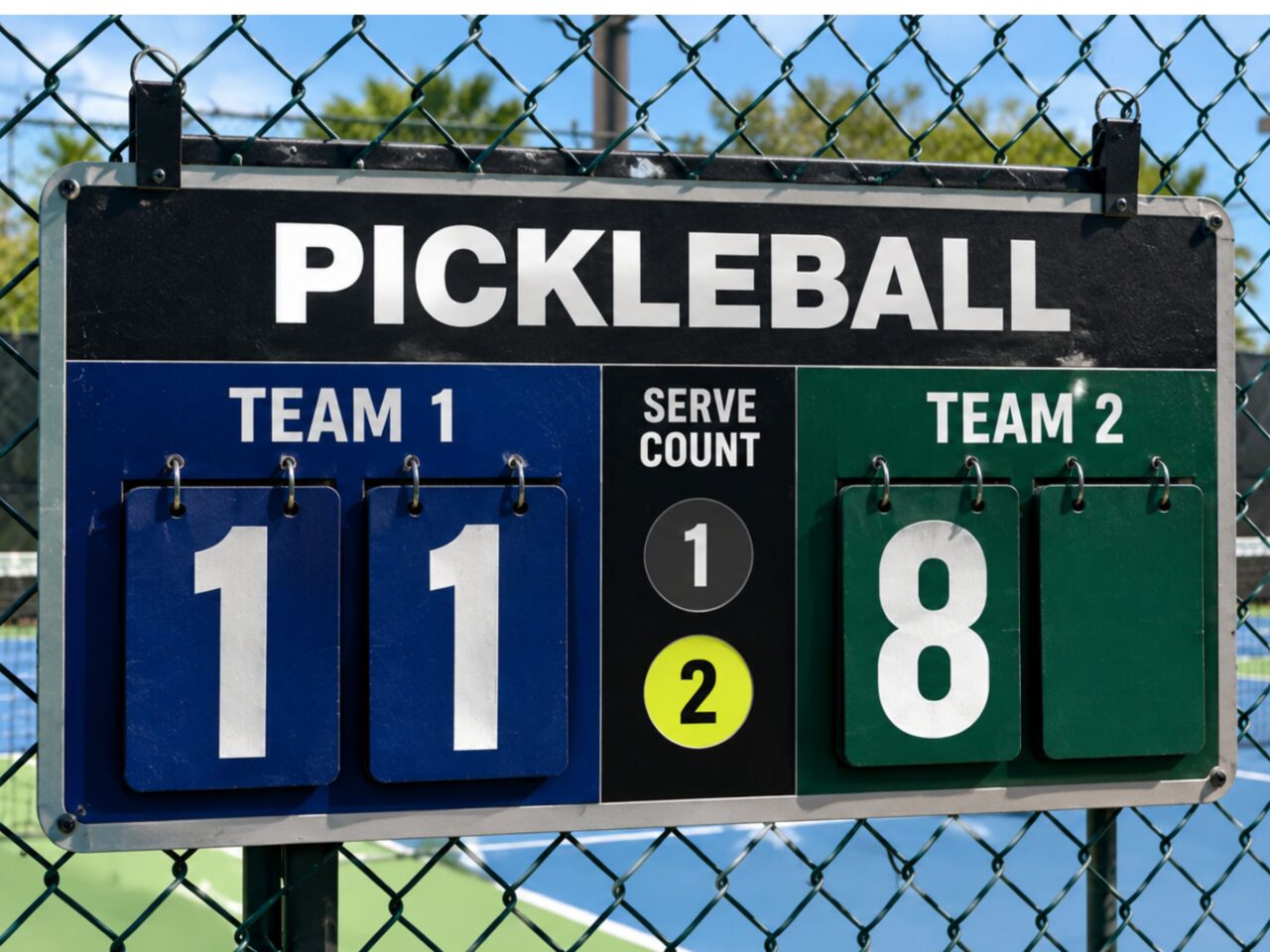
In traditional doubles pickleball, the score is announced using three numbers:
Serving team’s score – Receiving team’s score – Server number
For example:
Example score call
5 |
3 |
2 |
| Serving team | Receiving team | Server number |
Called aloud as “five–three–two”
This means the serving team has five points, the receiving team has three, and the team’s second server is serving.
The third number is particularly important. It identifies whether the current server is the first or second server in that team’s service turn.
It does not permanently identify a particular player. A player may be Server 1 during one service turn and Server 2 during another.
Why Does Every Game Start at 0–0–2?
The opening score in standard doubles pickleball is 0–0–2, not 0–0–1.
At the beginning of each game, the first serving team receives only one server’s opportunity before service passes to the opponents. This prevents the opening team from having the full two-server advantage.
Here’s how it works:
- Team A begins serving at 0–0–2.
- If Team A wins the rally, the score becomes 1–0–2, and the same player serves again from the opposite service court.
- When Team A loses a rally, a side-out occurs.
- Team B takes possession of the serve, beginning at 0–1–1 if Team A scored one point.
After this opening exception, both players on a doubles team normally have an opportunity to serve during each service turn.
Serving Rotation: When Do Players Switch Sides?
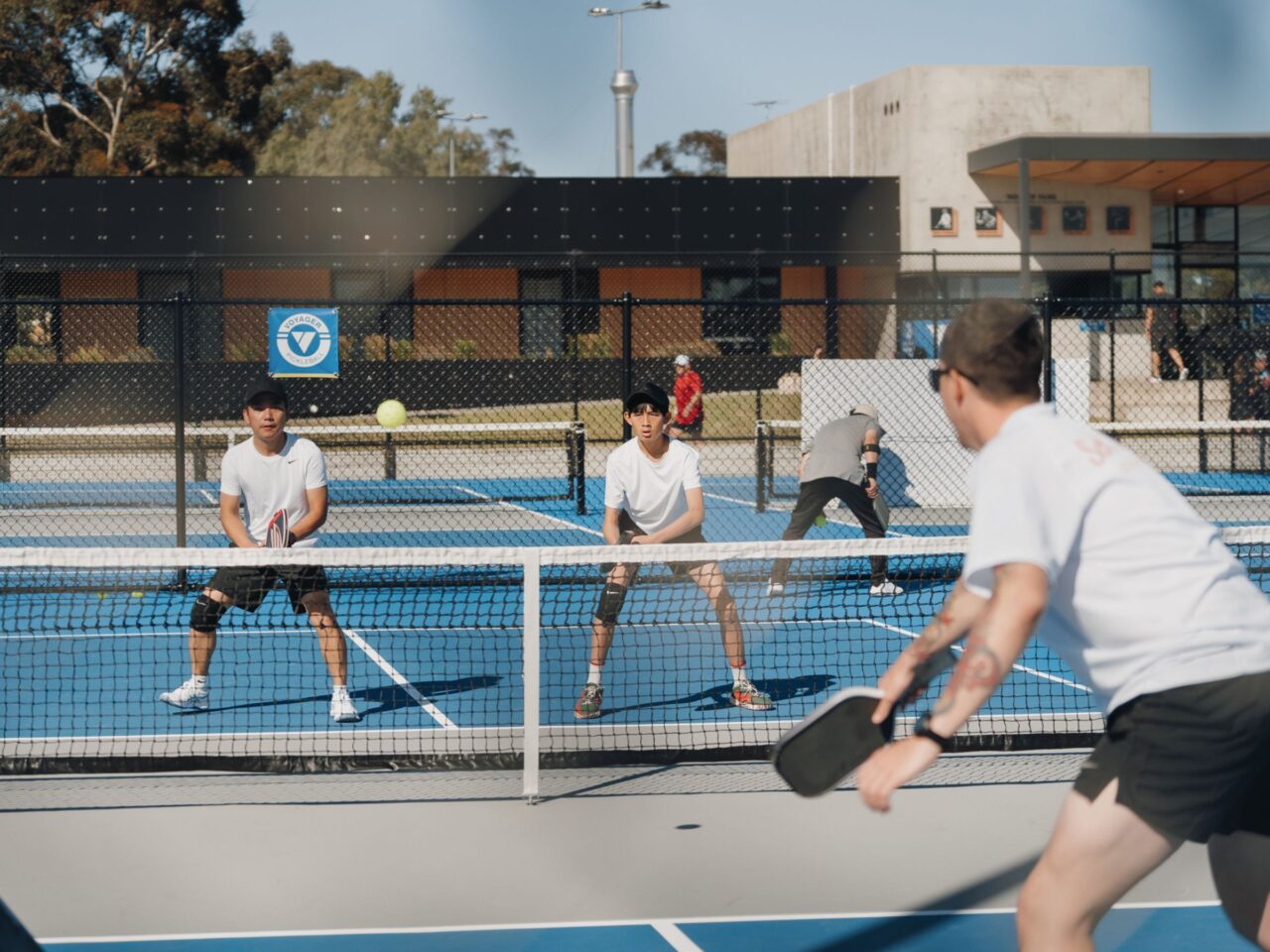
The serving team’s positioning changes according to the outcome of each rally.
When the serving team wins a point, the same server moves to the opposite service court and serves again.
When the serving team loses a rally, the players do not switch sides. Instead, service passes to the partner, or to the opposing team if the second server has lost the rally.
| Rally outcome | What happens next? |
| Server 1 wins | One point awarded; Server 1 switches sides and serves again |
| Server 1 loses | No point; partner becomes Server 2 |
| Server 2 wins | One point awarded; Server 2 switches sides and serves again |
| Server 2 loses | Side-out; opposing team receives the serve |
A useful rule for beginners is that only the serving team changes service courts after winning a point. The receiving players do not switch courts simply because they won a rally.
Understanding Even and Odd Scores
In doubles, the player who began the game in the right-hand service court for their team is positioned on the right when that team’s score is even, and on the left when it is odd.
This provides a useful way to check positioning when players lose track of the score.
For singles, the rule is simpler: serve from the right-hand court when the server’s score is even and from the left-hand court when it is odd.
Pickleball Serving Rules: What Makes a Legal Serve?
A legal serve must travel diagonally across the net into the opposite service court.
The server must be positioned behind the baseline, within the imaginary extensions of the centreline and sideline, with at least one foot grounded in the correct serving area when the ball is struck.
Two main service techniques are permitted.
Volley serve: The ball is struck before bouncing. The paddle must move in an upward arc, contact must occur no higher than the waist, and the paddle head must not be above the highest part of the wrist at contact.
Drop serve: The server releases the ball from a natural height without propelling it, lets it bounce, and then strikes it. The volley-serve contact restrictions do not apply.
Only one serve attempt is permitted. If the serve is a fault, the server loses that service opportunity.
The serve must land beyond the non-volley zone, also called the kitchen. A serve touching the kitchen line is a fault, but a serve touching another boundary line of the correct service court is in.
If the ball touches the net and still lands legally in the correct service court, play continues. There is no automatic replay simply because the serve touched the net.
The Two-Bounce Rule Explained
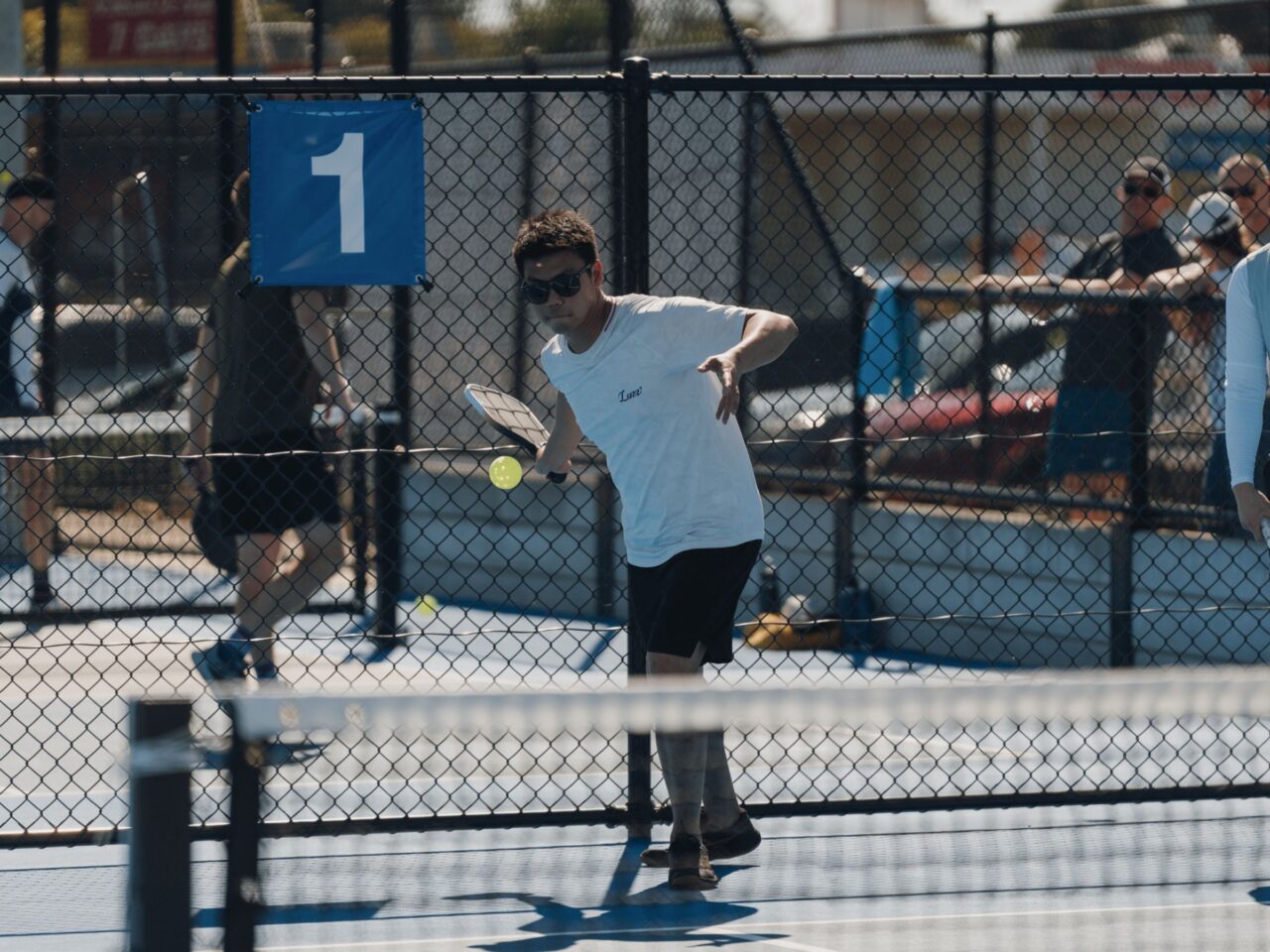
The two-bounce rule is one of the most important pickleball rules because it controls what happens immediately after the serve.
The receiving team must let the serve bounce before returning it. The serving team must then let that return bounce before hitting the next shot.
The first three shots of a rally
| ↗️ | ↙️ | ☑️ |
Service |
Return |
Third shot |
| Must bounce in the receiving court | Must bounce in the serving court | May be volleyed or played after a bounce |
After those two required bounces, players may volley the ball or let it bounce before returning it.
A common beginner mistake is rushing forward after serving and volleying the return before it bounces. That is a fault under the two-bounce rule.
What Are the Kitchen Rules in Pickleball?
The non-volley zone, commonly called the kitchen, extends approximately 2.13 metres (7 feet) from the net on each side.
Players cannot volley a ball while touching the kitchen or its boundary line.
However, standing in the kitchen is not automatically a fault.
A player may enter the kitchen, wait for a ball to bounce and then return it. They can also remain there when not volleying.
A fault occurs when a player volleys while touching the kitchen, or when their momentum from a volley causes them or anything they are wearing or carrying to touch the kitchen.
That momentum rule still applies even if the ball has already become dead.
For example, a player standing outside the kitchen might hit a winning volley, then lose their balance and step onto the kitchen line because of the shot. That is a fault.
To volley again after being inside the kitchen, a player must first re-establish both feet completely outside it.
The kitchen rules can take some getting used to, particularly when players start moving towards the net. Practising these situations during a game can help. You can explore pickleball court hire at Voyager Tennis to get more time on court.
Common Pickleball Faults Beginners Should Recognise
A fault ends the rally and determines whether the serving team scores or service changes hands.
Common faults include:
- Out ball: A returned ball lands completely outside the opponent’s court.
- Net fault: A player fails to return the ball across the net.
- Double bounce: A player allows the ball to bounce twice before returning it.
- Kitchen fault: A player volleys while touching the non-volley zone or violates the momentum rule.
- Illegal serve: A serve violates the applicable serving requirements or lands outside the correct service court.
- Two-bounce violation: A player volleys the serve or the return of serve before its required bounce.
- Player contact: A live ball strikes a player’s body or clothing, subject to the limited exceptions in the rules.
When a serving team commits a fault, the result is a change of server or a side-out. When the receiving team commits a fault, the serving team earns a point under traditional scoring.
Is a Ball on the Line In or Out?
A ball touching any part of a boundary line is considered in, with one important exception: the non-volley zone line on a serve.
A serve touching the kitchen line is a fault.
During rallies, a ball touching a court boundary line is in.
Players making their own line calls should give opponents the benefit of the doubt when they cannot clearly determine whether a ball landed out.
Does Every Pickleball Competition Use the Same Scoring System?
Not necessarily.
Traditional side-out scoring remains a common format, but some competitions use rally scoring.
Under rally scoring, the team winning a rally earns a point regardless of which team served. The scoring announcement and service procedures also differ from standard side-out scoring.
The 2026 rulebook includes a provisional rally-scoring option, so players should always check their competition’s specific format before playing.
For tournament play, confirm the target score, whether games must be won by two points, the scoring system and any event-specific procedures.
Once you’re comfortable with the basic pickleball rules, you might want to try playing against different opponents. Voyager offers pickleball competitions and social matchplay, including opportunities for players at different levels.
Frequently Asked Questions About Pickleball Rules
Can the receiving team score a point?
Under traditional side-out scoring, no. Only the serving team can score. Under rally scoring, either team can score by winning the rally.
Can both players on a doubles team serve?
Yes. Both partners normally receive a serving opportunity during each service turn. The exception is the opening service sequence of a standard game.
Can a player step into the kitchen?
Yes. Players can enter the kitchen at any time, but they cannot volley while touching it or violate the volley momentum restrictions.
How many times can the ball bounce?
After the serve and return have each bounced as required, players can hit the ball before it bounces or after one bounce. Allowing a second bounce before returning it is normally a fault.
What happens when the score reaches 10–10?
In a standard game to 11, play continues until one side wins by two points. The game could finish 12–10, 13–11 or another score with a two-point margin.
Put Your Knowledge of Pickleball Rules Into Practice
Understanding pickleball rules makes games easier to follow, particularly when playing doubles. Knowing how to announce the score, identify the correct server and recognise common faults also helps avoid unnecessary disputes.
For beginners, the most useful starting point is to practise calling the score before every serve and checking court positions after each rally.
Once those habits become familiar, players can spend less time working out whose turn it is and more time concentrating on the game.
Voyager Tennis offers opportunities to learn and play pickleball, including coaching and court hire.
Explore voyagertennis.com to put these rules into practice.
Rules references: This article uses the 2026 official rulebook referenced by Pickleball Australia and the 2026 USA Pickleball Rulebook . Specific tournaments may adopt different approved scoring formats.
Share This
Related Posts