

Adult Tennis Lessons: The Best Way to Learn

Key Takeaways
- Adult tennis lessons provide structured coaching that can make learning the fundamentals easier.
- Professional feedback helps players identify technical mistakes before they become difficult habits to change.
- Group lessons combine coaching with opportunities to practise alongside players of a similar level.
- Regular lessons can improve technique, movement, match awareness and confidence.
- Adults don’t need previous experience or a high level of fitness to start learning tennis.
Learning tennis as an adult can seem straightforward at first. Pick up a racquet, find a court and start hitting balls with a friend. But once the rallies begin, many new players quickly discover there is much more happening than simply getting the ball over the net.
Grip, footwork, timing, positioning and shot selection all influence what happens on court. Trying to work everything out independently can make the learning process frustrating, particularly when a player doesn’t know why the same mistake keeps happening.
This is where adult tennis lessons can make a significant difference. Instead of relying on trial and error, players receive structured guidance that helps them understand how the game works while developing their skills progressively. Whether someone has never held a racquet before or is returning after years away from the sport, coaching provides a clearer pathway towards playing with confidence and enjoying more consistent rallies.
Starting With the Right Fundamentals
One of the biggest advantages of learning with a coach is developing good habits from the beginning.
New players sometimes focus entirely on where the ball lands without considering how they produced the shot. They may use an uncomfortable grip, swing mainly with their arm or stand too close to the ball. The shot might occasionally work, but repeating it consistently becomes much harder.
Adult tennis lessons introduce the fundamentals in a more structured way, helping players understand areas such as:
- Grip and racquet preparation for different shots.
- Footwork and positioning to reach the ball efficiently.
- Swing technique for greater control and consistency.
- Serving fundamentals to begin points confidently.
- Court positioning for both singles and doubles.
Building these foundations early gives players something reliable to work from as their tennis develops.
Feedback Makes Practice More Productive
Practising regularly is important, but practice becomes much more useful when players understand what they should be working on.
A player might hit dozens of forehands while making the same technical mistake each time. Without feedback, it can be difficult to recognise what needs changing. A coach can identify the problem, explain why it is happening and suggest an adjustment that the player can immediately practise.
That feedback loop is one of the biggest benefits of adult tennis lessons. Instead of guessing whether something feels right, players receive guidance based on what is actually happening during their shots.
This doesn’t mean every stroke needs to become technically perfect. For most recreational players, the objective is to develop reliable techniques that make rallies easier, matches more enjoyable and continued improvement possible.
Learning With Players at a Similar Level
For many adults, learning tennis is also a social experience.
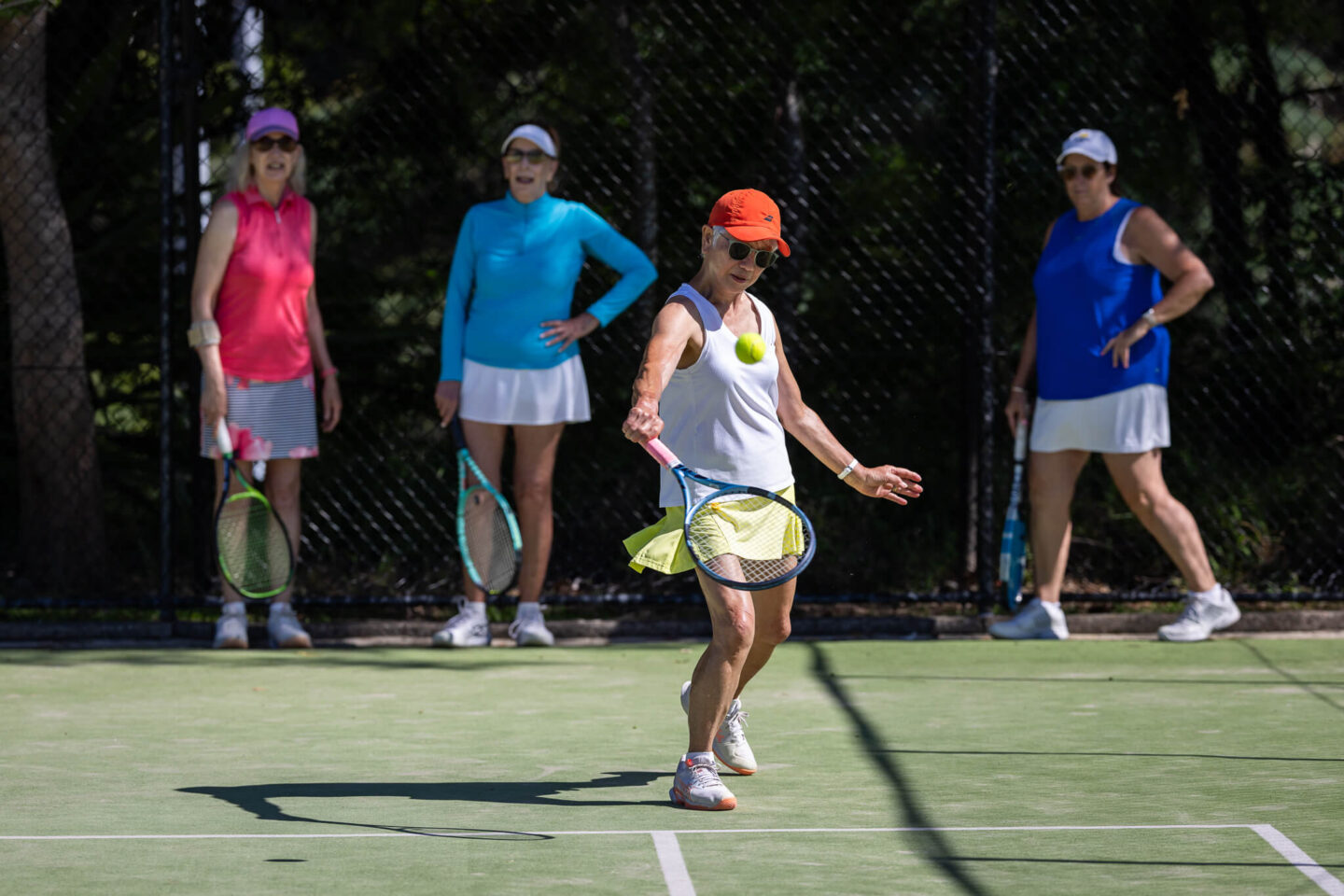
Group coaching provides an opportunity to practise alongside other players who are working through similar challenges. Voyager Tennis’ adult group coaching, for example, places players with others of a comparable level and combines drills, fitness, footwork and match play within the sessions.
That environment can make learning feel less intimidating, particularly for beginners. Nobody expects to arrive with a perfect serve or immediately sustain long rallies. Everyone is there to improve.
Group lessons can also provide opportunities to:
- Meet other people interested in tennis.
- Rally with different playing styles.
- Practise doubles communication and positioning.
- Experience friendly competition.
- Build confidence before progressing into social or competitive matches.
As skills develop, having other players to practise with can become an important part of staying involved in the sport.
Technique Is Only Part of Learning Tennis
Knowing how to hit a forehand doesn’t automatically mean knowing when or where to hit it.
Once players become comfortable with the basic strokes, tennis becomes increasingly about decision-making. Should the ball be played cross-court or down the line? Is it better to attack or stay patient? Where should a player recover after hitting the ball?
These are difficult concepts to develop by practising strokes in isolation.
Structured coaching gradually introduces the tactical side of the game, helping players understand how their technique fits into actual points. Voyager’s adult tennis coaching program includes technical and tactical development alongside drills, footwork and match play, giving players opportunities to apply what they learn in realistic situations.
Over time, players aren’t simply learning how to hit the ball as they’re learning how to play tennis.
Lessons Create Consistency
Finding time for exercise and hobbies can be difficult when work, family and other commitments compete for attention.
Having a regular tennis lesson creates structure. Instead of waiting for a free weekend or trying to organise a hitting partner at the last minute, players have dedicated time each week to get on court.
That consistency matters because tennis skills develop through repetition. A single lesson can introduce a new technique, but regular practice helps make the movement feel natural.
For adults trying to establish a more active routine, weekly tennis also combines several benefits in one activity:
- Cardiovascular movement and footwork.
- Hand-eye coordination.
- Skill development and problem-solving.
- Social interaction.
- A reason to spend regular time outdoors and on court.
The result is an activity that can remain interesting because there is always another aspect of the game to improve.
Private Lessons Can Target Specific Areas
Group lessons aren’t the only option. Some adults may want more individual attention, particularly if they’re struggling with a particular stroke or want to progress more quickly.
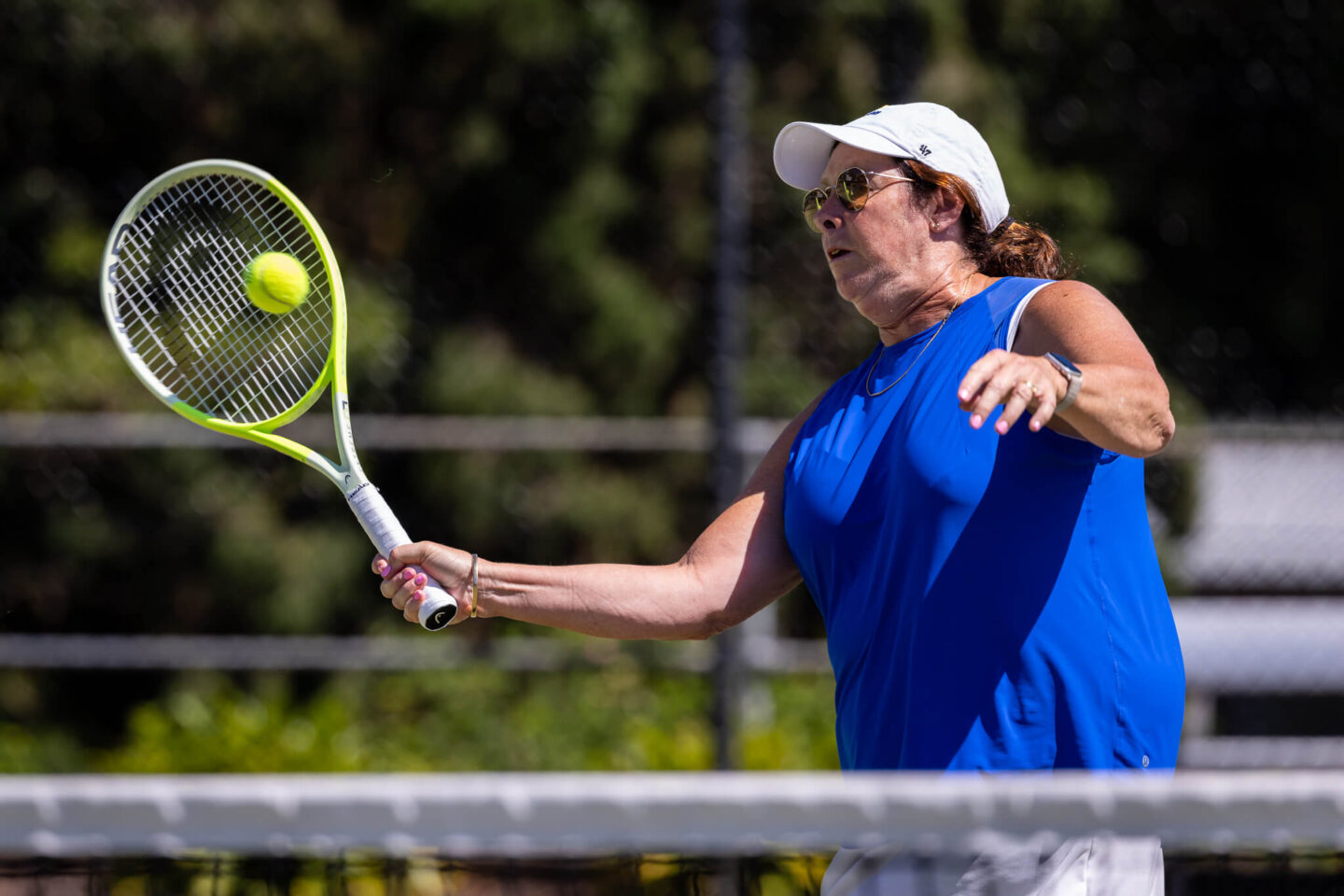
Private tennis coaching allows sessions to focus more closely on an individual player’s technique, strengths and areas requiring improvement. Voyager describes private coaching as one component that can help accelerate progress and improve areas that aren’t performing effectively during match play.
For example, a private session might concentrate specifically on:
- Developing a more reliable serve.
- Improving backhand technique.
- Correcting footwork.
- Building confidence at the net.
- Understanding singles or doubles tactics.
Some players may prefer group coaching, others private lessons, while many benefit from combining both as their game develops.
You Don’t Have to Be “Good Enough” to Start
One of the biggest barriers for adult beginners isn’t technique, it’s often confidence.
It can be easy to assume that tennis lessons are primarily for people who already know how to play. In reality, coaching can be particularly valuable at the beginning because players don’t have to work everything out themselves.
Voyager’s adult coaching program caters to different playing levels, including beginner, intermediate and advanced players. That means someone picking up a racquet for the first time can learn alongside people at an appropriate stage rather than feeling pressured to keep up with experienced players.
There is also no requirement to become a competitive player. Some adults want to improve enough to enjoy social tennis, others want a new way to exercise, and some eventually decide they’d like to play matches or competitions.
All are valid reasons to learn.
Building a Game You Can Enjoy for Years
Perhaps the strongest reason to take adult tennis lessons is that they can help make tennis more enjoyable.
When players understand the fundamentals, rallies become longer. When movement improves, reaching the ball becomes easier. When players understand positioning and tactics, matches begin to make more sense. Those small improvements can turn a frustrating first experience into a sport people genuinely look forward to playing.
Tennis can also continue to challenge players as they improve. Beginners might initially aim to maintain a short rally, while more experienced players may work on serve placement, doubles strategy or constructing points. There is always another level to explore.
Start Learning Tennis at Your Own Pace
There is no perfect age to start playing tennis and no requirement to arrive with previous experience. What matters is having an environment where players can learn the fundamentals, practise regularly and build confidence without feeling rushed.
At Voyager Tennis, adult coaching is designed for players across different abilities, with professional coaches supporting beginners as well as experienced players looking to improve their game.
For anyone considering adult tennis lessons, a free adult tennis trial can be an easy way to get started. It provides an opportunity to step onto the court, experience a coaching session and discover whether tennis could become the next activity worth making part of the week.
Share This
Related Posts