
Beginner Tennis for Kids: What Parents Should Expect
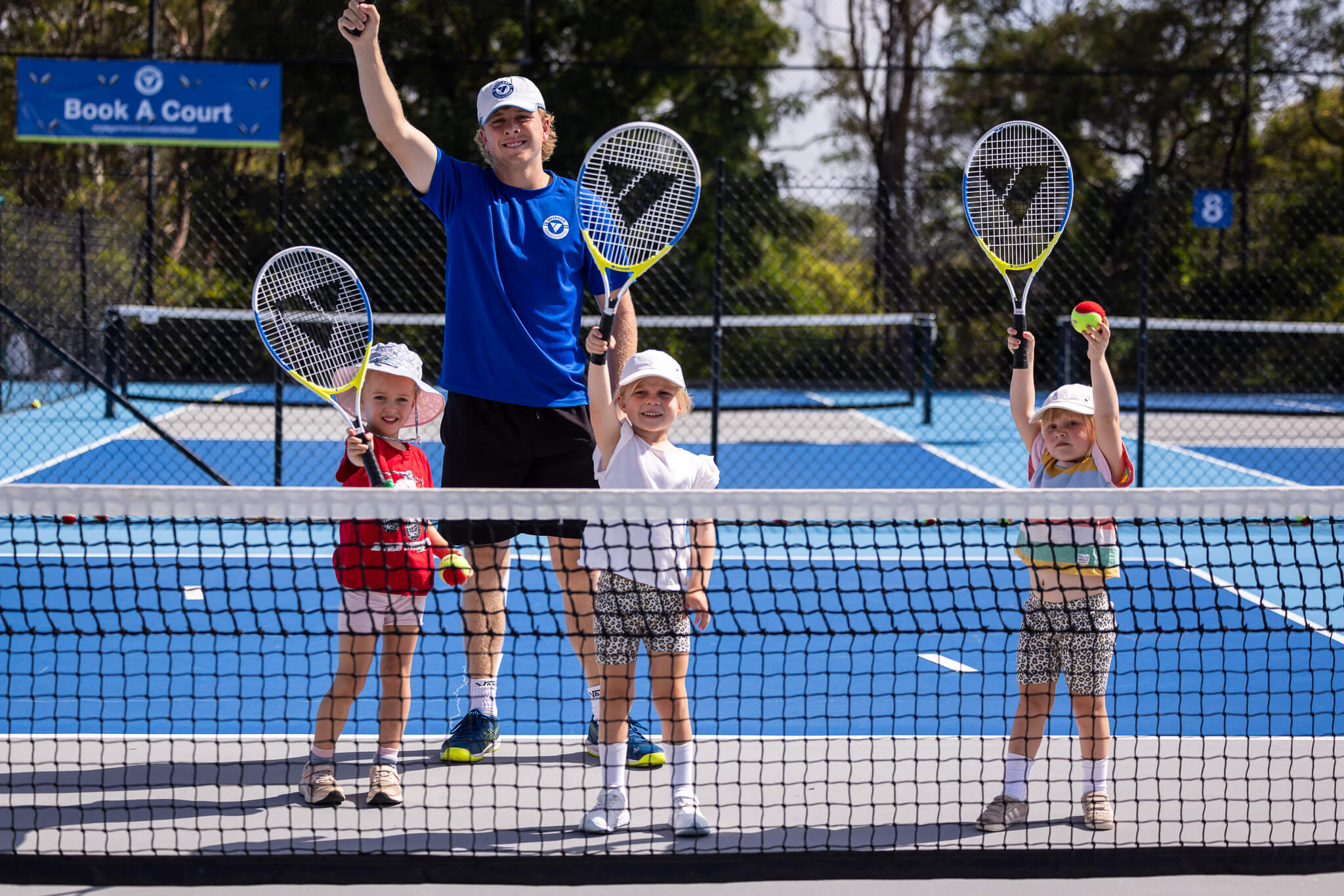
Starting a new sport can feel exciting for children and slightly uncertain for their parents. Will the child enjoy the class? Do they need their own racquet? Will they be expected to hit the ball over the net immediately?
Beginner tennis lessons are designed to introduce children to the game gradually. Rather than expecting young players to perform perfect serves and long rallies from their first session, coaches focus on helping them feel comfortable on the court, develop basic movement skills and enjoy learning.
Understanding what happens during the first few lessons can help parents set realistic expectations and give their child the support they need.
The First Lesson Is About Getting Comfortable
During a child’s first tennis lesson, the coach will usually spend time helping them become familiar with the court, equipment and other players in the class.
Children may take part in simple activities involving running, balancing, catching and throwing before they begin using a racquet. These exercises help coaches understand each player’s coordination, confidence and ability to follow instructions.
The atmosphere should feel welcoming rather than overly competitive. New players will make mistakes, miss the ball and occasionally send it in the wrong direction. That is all part of learning.
Parents should not expect their child to master a forehand during the first lesson. A successful first session may simply mean that the child participates, tries the activities and leaves the court looking forward to returning.
Voyager Tennis offers a free group coaching trial where children can experience a lesson before joining a regular program.
Lessons Use Equipment Designed for Children
Beginner tennis does not always take place on a full-sized court with standard yellow balls. Younger children usually learn with modified equipment suited to their age and stage of development.
Depending on the program, this may include smaller courts, lower nets, lightweight racquets and low-compression balls. Softer balls travel more slowly and bounce at a comfortable height, giving beginners more time to move, prepare and make contact.
Voyager’s junior pathway includes classes for different developmental stages. Its programs range from introductory activities for preschool children to red, orange, green and yellow-ball coaching as players become older and more capable. Parents can explore these options through Voyager’s junior tennis programs for school-aged children.
Using age-appropriate equipment makes it easier for children to experience rallies early. This can be more motivating than repeatedly trying to control a standard ball on a court that feels too large.
What Children Learn as Beginners
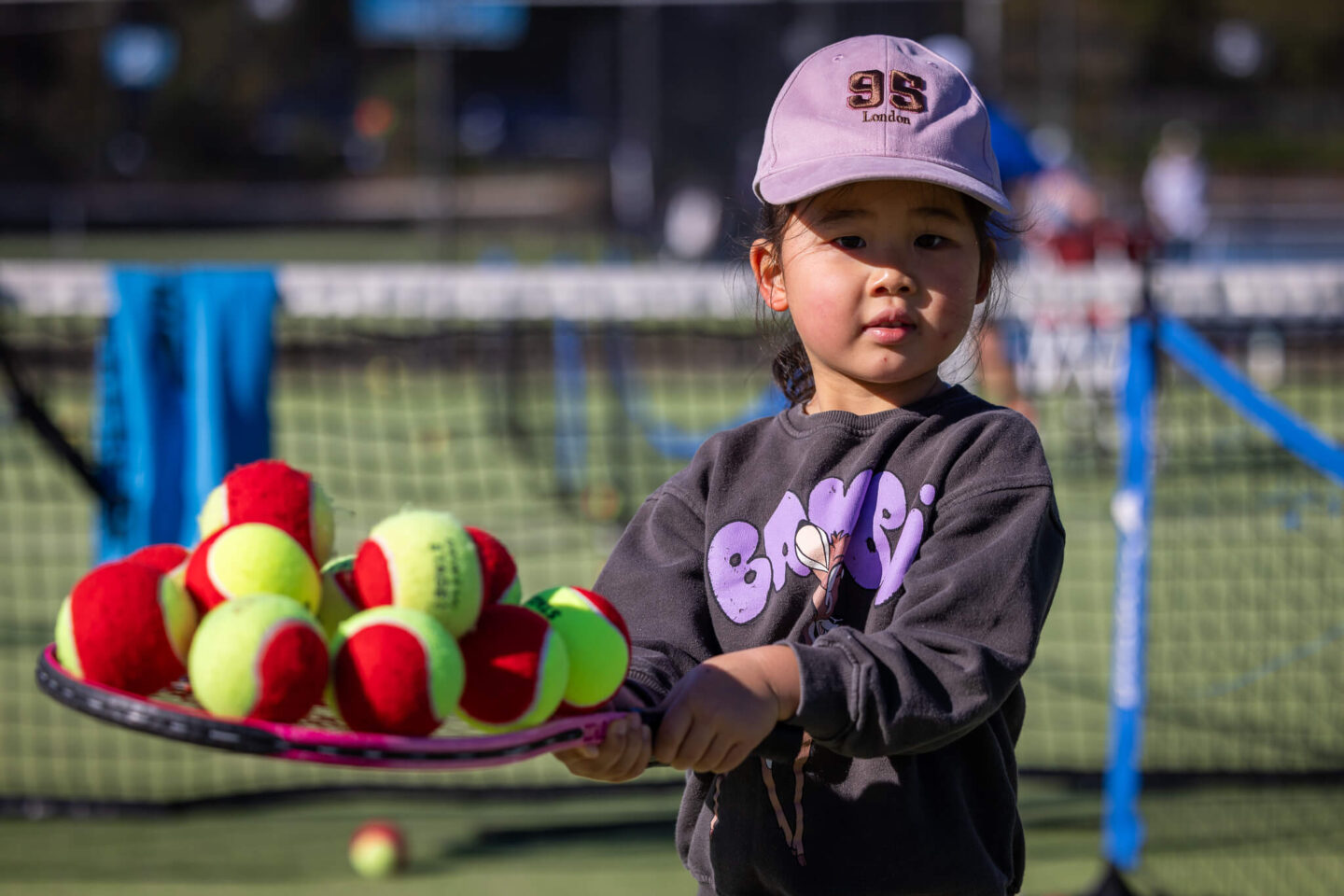
Early lessons generally combine tennis technique with fundamental movement skills. Children may practise holding the racquet, preparing for the ball, controlling a simple forehand and moving into the correct position.
They will also begin learning how to:
- Track and judge an approaching ball
- Balance while hitting
- Send the ball towards a target
- Rally with a coach or partner
- Listen and respond to instructions
- Take turns and participate in group activities
Scoring, serving and match play may be introduced gradually. Coaches usually prioritise control and consistency before power.
The goal is not to rush children into full competition. It is to build a foundation that helps them play with confidence and develop sound habits as they progress.
Classes Should Still Feel Like Fun
Parents may be surprised by how much play is included in a beginner tennis class. Coaches often use games, team activities, targets and imaginative challenges to teach movement and technique.
This does not mean the children are not learning. Young players often respond better when technical skills are introduced through enjoyable activities rather than long explanations or repetitive drills.
A game involving cones might teach directional control. A catching activity may improve anticipation, while a relay can develop speed, balance and court awareness.
Enjoyment is particularly important during the beginner stage. A child who has fun is more likely to attend consistently, practise willingly and remain involved in the sport. Tennis can also create opportunities to socialise, cooperate and make new friends, as discussed in Voyager’s article about how junior tennis helps children connect with others.
Progress Will Look Different for Every Child
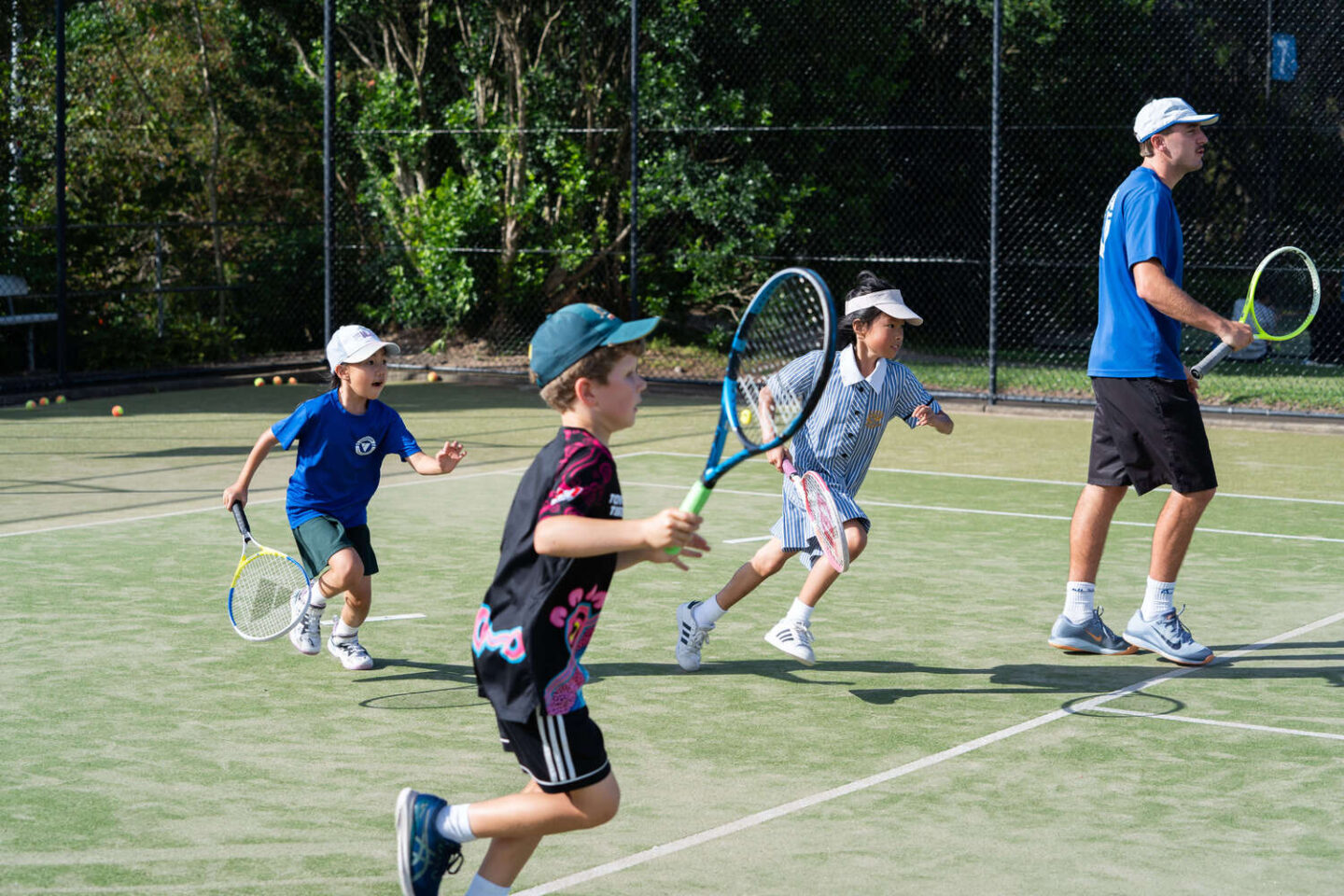
Some children begin making contact with the ball quickly, while others need several sessions to become comfortable holding the racquet. Neither experience means that a child is more or less suited to tennis.
Progress can depend on age, coordination, confidence, previous sporting experience and how frequently the child attends lessons. Younger beginners may initially show improvement through better balance, listening and movement rather than traditional tennis strokes.
Parents can support development by focusing on effort instead of comparing their child with other players. Asking whether they enjoyed the lesson or learned something new is usually more helpful than asking how many points they won.
Regular attendance is also important. Skills become more familiar when children have consistent opportunities to practise and receive feedback from their coach.
What Children Should Bring
Beginner players should arrive in comfortable sports clothing and supportive athletic shoes. A hat, sunscreen and water bottle are also important for outdoor lessons in Australia.
Parents should check with the chosen venue before purchasing a racquet. Many programs can provide suitable equipment during a trial lesson, and a coach can recommend the correct racquet size once the child is ready to continue.
An oversized or heavy racquet can make learning unnecessarily difficult, so professional guidance can help parents avoid buying unsuitable equipment.
How Parents Can Help
The most useful role a parent can play is to remain positive and patient. Children benefit when they are encouraged to try, make mistakes and learn at their own pace.
Parents do not need to coach from the sideline or correct every missed shot. Mixed instructions from parents and coaches can sometimes confuse beginners. It is generally better to allow the coach to lead the technical development while the parent provides encouragement.
For families completely new to the sport, Voyager’s guide to getting started with tennis provides additional advice for introducing children and adults to the game.
Finding the Right Beginner Tennis Program
A good beginner program should provide age-appropriate coaching, suitable equipment and a clear pathway for future development. Classes should challenge children without making them feel overwhelmed.
Parents should also consider the coach’s experience, class size, venue location and whether the session fits comfortably into the family’s weekly routine. Voyager Tennis operates across several Australian communities, and families can use the locations directory to find a nearby venue and review its available junior classes.
The first few tennis lessons are only the beginning. With supportive coaching, realistic expectations and regular participation, a beginner can gradually develop coordination, confidence and a genuine enjoyment of the sport.
For parents who are unsure whether their child is ready, booking a free trial offers a simple opportunity to meet the coaches, experience the program and see how the child responds on court.
Share This
Related Posts