
Beginner Tennis Lessons for Adults: Everything You Should Know
Key Takeaways
- Beginner tennis lessons for adults are designed for players with little or no previous tennis experience.
- Lessons introduce essential skills such as forehands, backhands, serving, footwork and court positioning.
- Adults don’t need to be particularly fit or athletic before starting tennis.
- Group coaching provides a supportive environment for learning while meeting players at a similar level.
- Consistency matters more than immediate results, with confidence and technique developing through regular practice.
Starting tennis as an adult can feel slightly intimidating. Perhaps friends have invited someone to play, they’ve watched professional tennis and thought about giving it a go, or they’re simply looking for a more enjoyable way to stay active. Whatever the motivation, one question often comes first: Do I need to know how to play before joining a lesson?
The simple answer is no.
Beginner tennis lessons for adults are specifically designed to introduce new players to the game without expecting previous experience. Nobody needs to arrive knowing how to serve, understand every rule or maintain long rallies. Learning those skills is precisely why beginner coaching exists.
Rather than trying to understand everything at once, adults can develop their game progressively. The early stages focus on becoming comfortable with the racquet and ball before introducing more technique, movement, scoring and match play.
What Happens in Beginner Tennis Lessons for Adults?
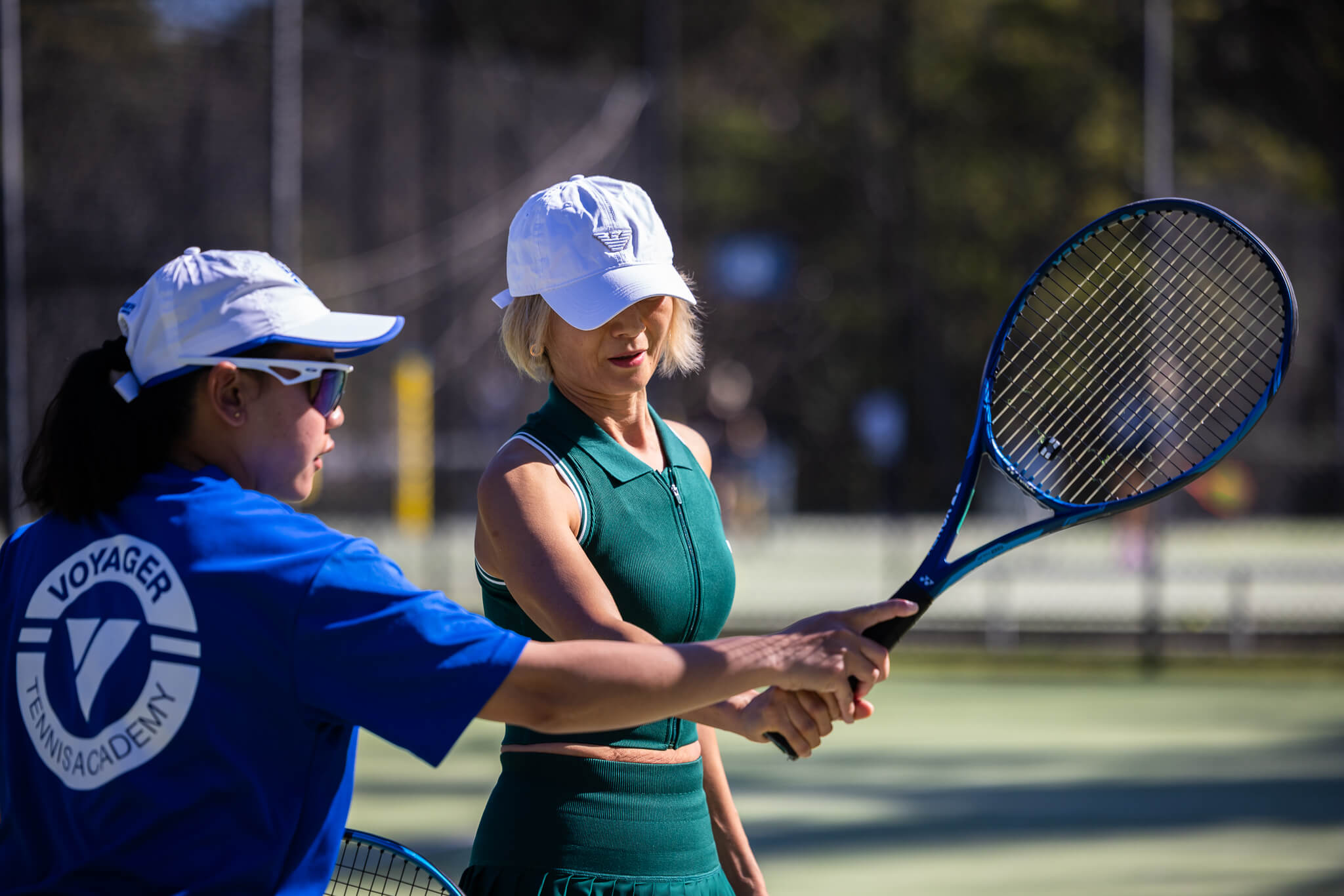
The first few sessions aren’t about producing perfect strokes. They’re about becoming comfortable on court and understanding the basic movements needed to play.
A coach will generally introduce skills progressively, giving players opportunities to practise through drills, games and rallies. While every coaching program is different, beginners can expect to work on areas such as:
- Forehands and backhands to develop control from the baseline.
- Grip and racquet preparation for more reliable strokes.
- Footwork and movement to reach the ball in a balanced position.
- Serving and returning to understand how points begin.
- Court positioning for basic singles and doubles play.
- Scoring and rules to prepare for social matches.
There’s no expectation to remember everything immediately. Each lesson provides another opportunity to repeat movements, ask questions and gradually become more comfortable with the game.
You Don’t Need to Get Fit Before Starting
A common misconception is that adults need to improve their fitness before joining tennis lessons.
For most beginners, that’s unnecessary.
Beginner tennis lessons for adults are typically structured around the abilities of the players involved. Early sessions focus on learning technique and movement rather than demanding lengthy, high-intensity rallies.
As players become more comfortable, tennis itself can contribute to a more active lifestyle. Moving around the court involves changes of direction, coordination, balance and cardiovascular activity, but players can develop these progressively alongside their tennis skills.
Adults with particular physical concerns should discuss them with their coach so activities can be approached at an appropriate pace.
What Equipment Does a Beginner Need?
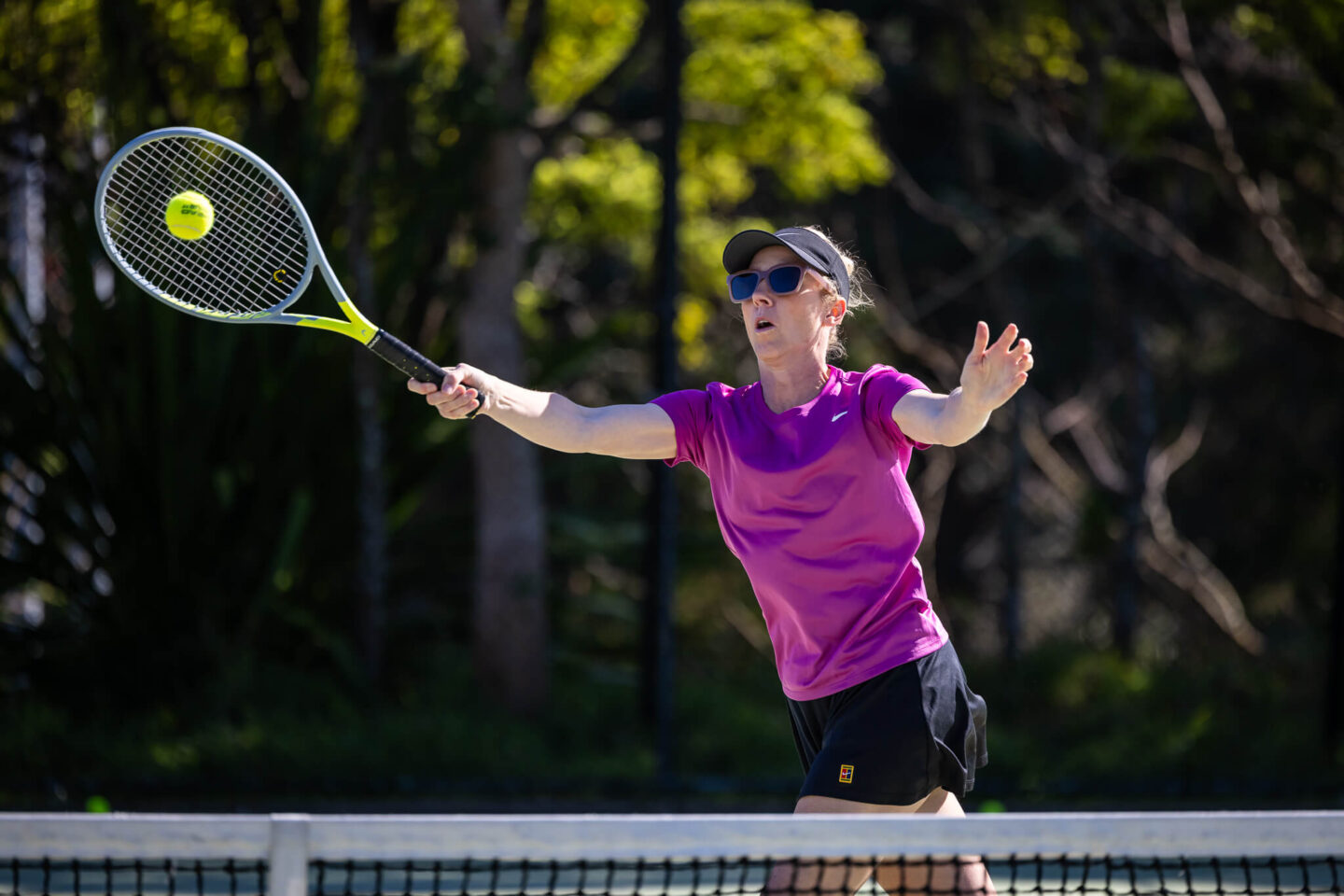
Getting started doesn’t require an expensive collection of tennis equipment.
Comfortable sports clothing and supportive footwear are the most important considerations. A racquet will obviously be needed, but beginners shouldn’t feel pressured to purchase an expensive model before understanding what works for them.
Before the first few sessions, keep things simple:
- Wear comfortable clothing that allows unrestricted movement.
- Choose supportive sports shoes suitable for court activity.
- Bring plenty of water.
- Use appropriate sun protection for outdoor lessons.
- Ask a coach for advice before investing heavily in a racquet or other equipment.
Getting some guidance before purchasing a racquet can be worthwhile because factors such as weight, grip size and racquet head size can influence how comfortable it feels to play.
Group or Private Lessons: Which Should Beginners Choose?
Both options can be effective, but they provide different experiences.
Group beginner tennis lessons for adults are particularly useful for players who want the social side of tennis alongside structured coaching. Participants can learn with others at a similar stage, practise against different playing styles and experience friendly competition without the pressure of formal matches.
Group lessons can provide opportunities to:
- Meet other adults learning tennis.
- Practise with different partners.
- Develop basic doubles skills.
- Build confidence through games and rallies.
- Find potential hitting partners for future practice.
Private tennis coaching provides a different experience. With individual attention, the coach can spend more time on specific technical areas and adapt the pace of the session to the player.
Some adults prefer one format, while others combine group and private lessons as their game develops.
Don’t Expect Long Rallies Straight Away
Professional and experienced recreational players can make tennis look surprisingly simple. Beginners quickly discover that coordinating the feet, body and racquet while judging a moving ball takes practice.
Early rallies may last only a few shots. Serves might regularly miss the service box, and players will occasionally completely miss balls they expected to hit.
That’s part of learning tennis.
Instead of judging progress only by winning points, beginners can look for smaller improvements:
- Making cleaner contact with the ball.
- Rallying for a few more shots than before.
- Getting more serves into the correct service box.
- Reaching balls earlier and with better balance.
- Understanding where to position themselves.
- Feeling more confident playing without constant instructions.
These small improvements accumulate. Eventually, the game that initially felt fast and unfamiliar starts becoming much easier to understand.
Control Comes Before Power
Many beginners instinctively try to hit the ball harder because they associate powerful shots with better tennis.
However, a fast forehand isn’t particularly helpful if it rarely lands inside the court.
Early coaching generally places greater emphasis on control, balance and consistent contact. Players learn how their feet, body and racquet work together before worrying about producing additional speed.
This gives adults a more reliable foundation. Once a player can consistently direct the ball into the court, developing additional pace, spin and more advanced shot selection becomes much easier.
For beginners, keeping another ball in play is often a much more useful achievement than hitting one spectacular winner.
Learning the Rules Without Feeling Overwhelmed
New players don’t need to memorise the entire tennis rulebook before stepping onto a court.
Rules and scoring become much easier to understand when they’re experienced during actual play. Terms such as love, deuce and advantage might initially seem unusual, but they quickly become familiar after playing a few games.
As lessons progress, beginners can gradually learn:
- How tennis scoring works.
- Where to stand when serving and returning.
- When players change ends.
- Which lines apply to singles and doubles.
- How to position themselves with a doubles partner.
- Basic tennis etiquette.
Understanding these elements helps players transition from coaching exercises into social tennis with greater confidence.
The Social Side of Adult Tennis
Learning a new sport doesn’t have to be an individual experience.
One of the advantages of beginner tennis lessons for adults is the opportunity to meet people who are at a similar stage. Some may be joining for fitness, others want to learn a new skill, while some simply want another way to socialise and stay active.
Because everyone is learning, mistakes are expected. A missed serve or mistimed forehand doesn’t need to be embarrassing when the person on the other side of the net is working through exactly the same challenges.
As players improve together, coaching partners can eventually become regular hitting partners, doubles teammates or friends away from the court.
How Long Does It Take to Learn Tennis?
There isn’t one answer that applies to everyone.
An adult with previous experience in another racquet sport may adapt quickly, while someone completely new to sport may need more time to develop hand-eye coordination and movement.
Progress can depend on several factors:
- How regularly lessons are attended.
- How often the player practises outside coaching.
- Previous sporting experience.
- Individual coordination and fitness.
- Personal goals and motivation.
Rather than worrying about becoming “good” within a particular number of weeks, beginners can compare their current ability with where they started.
If rallies are becoming longer, serves are becoming more consistent and matches are becoming more enjoyable, progress is already happening.
Where Can Beginner Tennis Lessons Lead?
Being a beginner is only the first stage of the experience.
As confidence develops, adults can decide what they want tennis to become. Some may simply enjoy weekly coaching as a way to exercise and socialise. Others might start playing recreational doubles, organise regular matches with friends or eventually enter competitions.
Structured adult tennis coaching provides a pathway for players to continue developing as their skills and confidence improve. Those who want additional individual attention can also use private coaching to focus on specific aspects of their game.
There’s no requirement to become competitive. The goal can simply be reaching a level where stepping onto the court feels comfortable and enjoyable.
Ready to Pick Up a Racquet?
Perhaps the most important thing to know about beginner tennis lessons for adults is that being inexperienced isn’t a disadvantage. It’s the reason to take the lesson in the first place.
At Voyager Tennis, adults can develop their tennis through coaching suited to different abilities, providing beginners with an environment where they can learn progressively, practise with other players and build confidence on court.
For anyone who has been considering tennis but isn’t sure where to begin, a free tennis trial provides an opportunity to experience a session before committing. There’s no need to wait until you’re fitter, more coordinated or more familiar with the rules. Starting is how those skills develop.
Share This
Related Posts