

How to Choose the Right Tennis Coaching Program

Finding a tennis coaching program can seem straightforward until you start comparing your options. Some lessons focus on developing technique, others emphasise matchplay, and some provide a combination of both. Group sizes, coaching approaches and training schedules can also vary considerably.
With so many options available, how do you know which program is right for you?
The answer isn’t necessarily the program with the most intensive training or the highest price. A good tennis coaching program should match your current ability, support your goals and provide an environment where you can develop your skills consistently.
Whether you’re picking up a racquet for the first time or looking to take your game further, knowing what to look for can help you make a more informed decision.
1. Identify What You Want to Achieve Through Tennis Coaching
Before comparing tennis programs, think about what you want to improve.
Not everyone approaches tennis with the same goals. Some players want to learn the fundamentals, while others are working towards more consistent rallies, stronger serves or better match performance.
Your objectives will influence the type of coaching you need.
For example, a beginner may benefit from lessons that introduce grip, footwork, basic strokes and court positioning.
A player with more experience might need coaching that focuses on tactical decision-making, shot selection or specific weaknesses.
If you’re unsure about your goals, that’s fine too. A coach can help identify your current strengths and areas for improvement.
The important thing is to choose a program that provides a clear direction rather than simply attending lessons without knowing what you’re working towards.
2. Choose a Program That Matches Your Skill Level
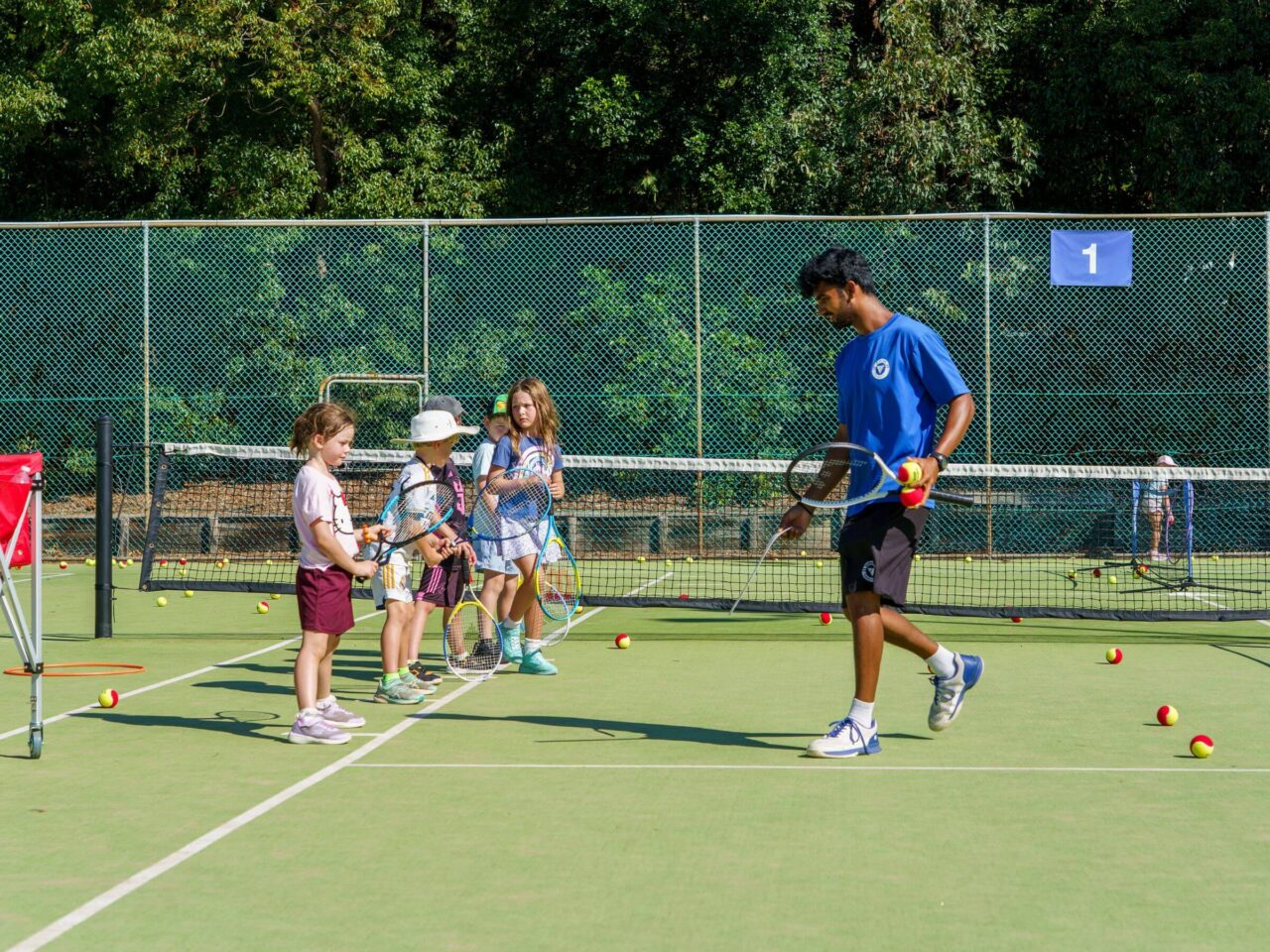
One of the most important factors when selecting tennis coaching is finding a program suited to your current ability.
A session that’s too advanced can make it difficult to follow drills and develop confidence. On the other hand, a program that repeatedly covers skills you’ve already mastered may offer limited opportunities for improvement.
Tennis coaching generally supports different stages of development.
Beginner Tennis Coaching
Beginner programs focus on building the foundations of the game.
This usually includes learning how to hold the racquet, understanding basic court positioning, developing forehand and backhand strokes, and practising simple rallies.
The emphasis should be on developing correct movement patterns and becoming comfortable hitting the ball.
Intermediate Tennis Coaching
Intermediate players typically have some experience with rallies and basic matchplay.
Coaching at this level may focus on improving consistency, controlling shot direction, developing serves and returns, and understanding tactical positioning.
Players can also begin working on recognising different match situations and selecting appropriate shots.
Advanced Tennis Coaching
Advanced coaching generally involves more detailed technical and tactical development.
Sessions may include point construction, movement efficiency, serve variation, match analysis and competition preparation.
At this stage, training becomes increasingly specific to the player’s strengths, weaknesses and performance goals.
A suitable program should challenge you without making every session feel overwhelming.
3. Understand the Difference Between Group and Private Tennis Lessons
Both group coaching and private lessons can help players improve, but they offer different learning experiences.
Group Tennis Coaching
Group coaching provides opportunities to practise with other players while receiving instruction from a coach.
Sessions may involve technical drills, partner activities, rally exercises and modified matchplay.
Group lessons can be particularly useful for developing consistency in different playing situations.
They also allow players to practise against a variety of shots and playing styles.
Private Tennis Coaching
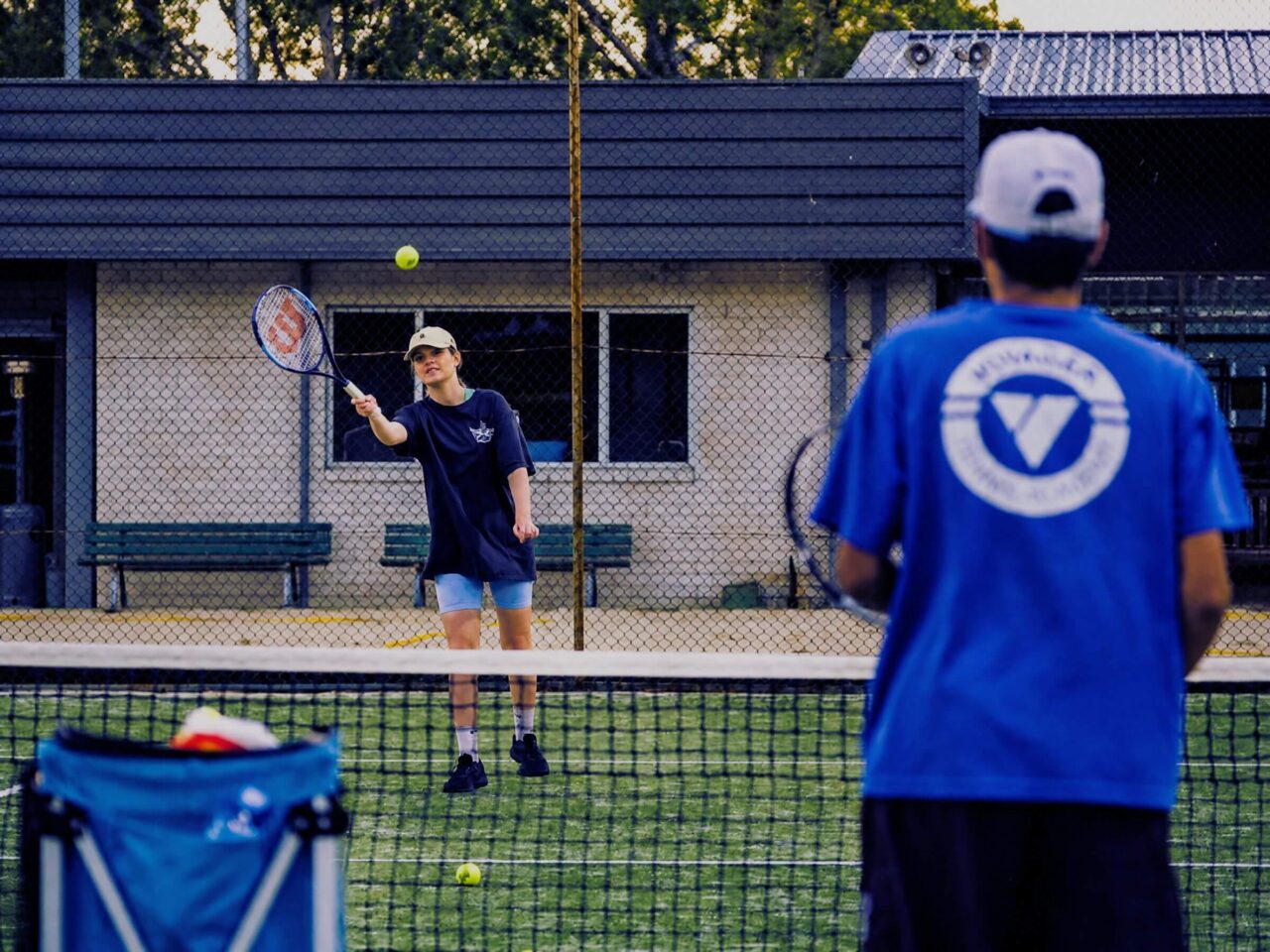
Private lessons provide more individual attention.
A coach can spend additional time assessing technique, identifying weaknesses and adjusting exercises based on specific needs.
This format can be useful when working on a particular skill, such as improving serve mechanics or correcting an inconsistent backhand.
Which Coaching Format Is Better?
Neither option is automatically better.
| Group coaching | Private coaching |
| Practise with different players | Receive individual instruction |
| Develop skills through group drills | Focus on specific technical needs |
| Opportunities for rallying and matchplay | Training pace tailored to the individual |
| Generally more affordable per session | Generally higher cost per session |
| Structured around group activities | More flexibility in session content |
Some players benefit from combining both formats.
For example, group lessons can provide regular practice opportunities, while occasional private sessions can address specific areas for improvement.
The right balance depends on your goals, budget and training schedule.
4. Look Beyond Qualifications and Consider the Coaching Approach
A coach’s qualifications and experience are important, but how they deliver lessons also matters.
Good tennis coaching involves more than demonstrating a technique and asking players to repeat it.
A coach should be able to explain skills clearly, identify areas for improvement and provide feedback that players can apply during practice.
When evaluating a coaching program, consider whether the coach:
- Explains the purpose of drills and activities.
- Provides specific, constructive feedback.
- Adjusts exercises to suit different abilities.
- Encourages questions and communication.
- Balances technical instruction with opportunities to practise.
For example, rather than simply telling a player to hit the ball earlier, a coach might explain how preparation and footwork affect contact timing.
Understanding why a change is needed can make it easier to apply during rallies and matches.
A coaching approach that suits your learning style can make regular training more productive.
5. Check Whether the Program Includes Matchplay
Learning how to hit a forehand or backhand is only part of becoming a better tennis player.
During a match, players need to make decisions while moving, responding to different shots and managing pressure.
That’s why matchplay opportunities can be an important part of a tennis coaching program.
Training may include:
- Point-based drills that simulate match situations.
- Serve and return practice.
- Tactical exercises focused on court positioning.
- Practice sets and supervised matchplay.
- Opportunities to apply skills against different opponents.
Matchplay also helps players identify areas that need further attention.
For instance, a player might perform well during a controlled rally drill but struggle to maintain consistency when points are being scored.
A program that combines technical development with practical playing opportunities can help bridge that gap.
6. Consider How the Program Supports Long-Term Improvement
Progress in tennis rarely follows a straight line.
Some skills develop quickly, while others require repeated practice over time.
A well-structured coaching program should help players build on what they’ve already learned rather than treating every lesson as an isolated session.
This doesn’t mean every program needs a complicated training plan.
Even a simple progression from basic technique to controlled rallies and then matchplay can provide a useful learning structure.
Ask how the program approaches skill development and whether players have opportunities to move into more advanced sessions as they improve.
Regular feedback can also help.
Knowing what you’re doing well, what needs attention and what to practise between lessons makes it easier to track your development.
7. Find a Training Schedule You Can Maintain

Consistency plays an important role in learning tennis.
Attending one intensive session and then not playing again for several weeks may make it harder to retain new skills.
For many recreational players, a regular weekly lesson combined with additional practice can be a practical starting point.
However, the ideal training frequency depends on experience, goals and availability.
Players preparing for competitions may benefit from more frequent sessions, while those learning recreationally might prefer a less demanding schedule.
When comparing programs, consider the lesson duration, frequency and travel time.
It’s also worth checking whether you can access courts for independent practice.
A program that fits comfortably into your routine is often more sustainable than one that requires constant schedule changes.
8. Compare Value, Not Just Tennis Lesson Prices
Cost is another factor when choosing tennis coaching.
Private lessons generally cost more per session than group coaching because the coach’s attention is focused on fewer players.
However, the cheapest option isn’t necessarily the best value.
Consider what the program includes.
Does it provide a structured learning experience? Are sessions appropriate for your ability? Do you receive useful feedback? Are there opportunities to practise what you’ve learned?
A more expensive session may be worthwhile if it addresses a specific technical issue, while regular group coaching may offer better value for someone who primarily wants consistent practice and gradual improvement.
It’s also worth checking cancellation policies, equipment requirements and whether there are additional costs for court hire or competitions.
Understanding the full cost helps you choose a program that suits your budget over time.
9. Try a Tennis Coaching Session Before Committing
Reading program descriptions and comparing lesson formats can help narrow your options.
However, experiencing a session can provide a clearer understanding of whether the coaching environment suits you.
A trial allows you to observe the coach’s communication style, experience the structure of the session and get a feel for the training environment.
It’s also an opportunity to ask questions about suitable programs, progression pathways and lesson schedules.
During the session, pay attention to whether the activities are appropriate for your ability and whether the instructions are easy to follow.
You don’t need to perform perfectly during a trial.
The purpose is to understand the coaching experience and decide whether you’d like to continue.
If you’re considering tennis coaching at Voyager Tennis, you can explore available options through the free trial booking page.
10. Recognise the Signs of a Good Tennis Coaching Program
Once you’ve started attending lessons, how can you tell whether you’ve made the right choice?
Improvement isn’t always immediately visible in match results.
Sometimes progress means making more consistent contact with the ball, understanding court positioning or becoming more confident during rallies.
A suitable coaching program should help you recognise these smaller developments.
You should also have a reasonable understanding of what you’re practising and why.
If lessons are consistently too easy, too difficult or disconnected from your goals, it may be worth discussing adjustments with your coach.
The best program is one that provides enough structure to support improvement while keeping tennis enjoyable.
Find the Right Tennis Coaching Program at Voyager Tennis
Choosing the right tennis coaching program comes down to understanding your goals, current ability and preferred learning environment.
Group coaching, private lessons, technical development and matchplay all have a place in tennis training. The right combination depends on what you want to achieve and how you prefer to learn.
At Voyager Tennis, players can explore coaching opportunities designed for different experience levels, from learning the fundamentals to developing more advanced skills.
Browse Voyager Tennis programs to explore available coaching options.
Not sure which tennis coaching program is right for you?
Experience a session before making a longer-term commitment.
Share This
Related Posts