
The Kitchen Sync Ep. 6 with Harry Brown [Podcast]
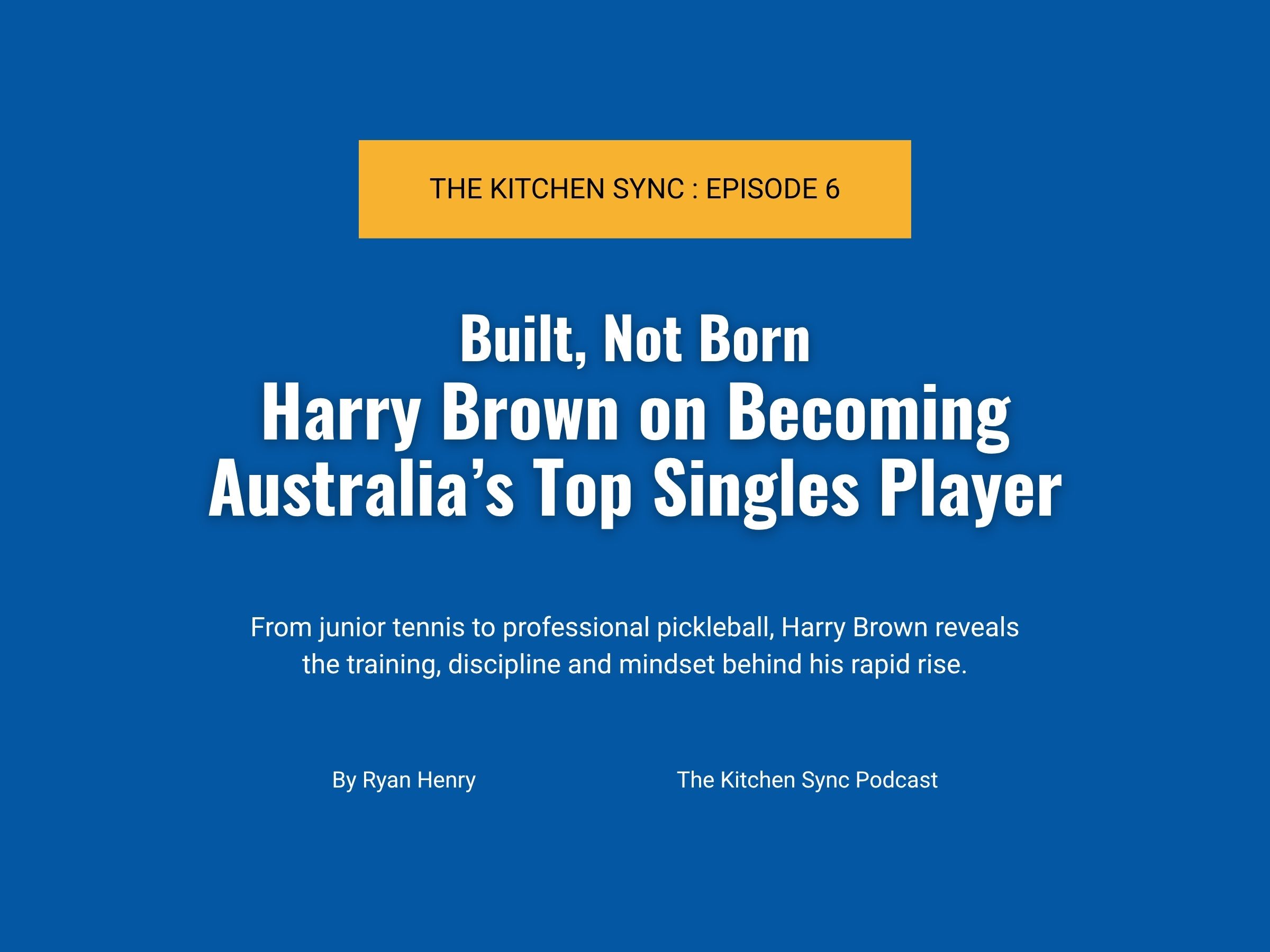
Australia’s pickleball scene continues to produce exciting talent, and few players have risen as quickly as Harry Brown.
In the latest episode of Kitchen Sync, Ryan Henry sits down with Australia’s top-ranked men’s singles player to discuss the journey from junior tennis to professional pickleball, what it takes to compete at the highest level, and why success comes down to far more than simply hitting great shots.
From moving overseas at just 14 years old to pursue tennis, to balancing work while building a professional pickleball career, Harry shares an honest look at the commitment, discipline and mindset required to keep improving in one of the world’s fastest-growing sports.
A Tennis Background That Built the Foundation
Harry’s sporting journey began long before pickleball entered the picture.
Like many of Australia’s top pickleball players, he developed his athletic foundation through competitive tennis. At just 14 years old, he moved to the United States to attend a tennis academy before earning a Division I scholarship at the University of Michigan. His goal at the time was simple: pursue professional tennis through the American college pathway.
Although professional tennis ultimately wasn’t the direction he pursued after university, those years of high-level competition gave him an ideal platform for pickleball.
When he returned to Queensland and discovered the rapidly growing local pickleball community, the transition happened surprisingly quickly.
“The Gold Coast crew were all super welcoming,” Harry explains, describing how experienced players helped him understand the finer details of a game that was very different from tennis despite sharing many familiar skills.
Why Singles Came Naturally
One of the most interesting discussions centres around Harry’s rapid rise in singles.
Within just a few months of taking up pickleball, he reached the Australian National Championships final before eventually becoming Australia’s No. 1 men’s singles player. Ryan points out that this pattern isn’t uncommon among high-level tennis players, with many transitioning into pickleball singles far quicker than doubles.
Harry agrees that the similarities between tennis and pickleball singles made the adjustment relatively smooth.
Doubles, however, has been a completely different challenge.
Unlike singles, where athleticism and court coverage often transfer naturally from tennis, doubles requires players to learn entirely new positioning, communication and tactical patterns. Harry admits he still sees enormous room for growth in that area of his game.
Balancing Work and Elite Sport
Another fascinating part of the conversation explores something many aspiring athletes can relate to, balancing full-time work with elite-level training.
When Harry first started competing, he worked full-time while trying to establish himself on the professional circuit. Managing training around work demanded exceptional organisation and discipline, skills he believes were developed during his teenage years living away from home in the United States.
As his results improved and his goals became clearer, he gradually reduced his workload to focus more heavily on pickleball.
That decision wasn’t made overnight, but it reflects a common reality for athletes chasing professional success: eventually, priorities need to shift.
Building a World-Class Singles Game
Ryan suggests that Harry is in a unique position.
While doubles continues to dominate professional pickleball, singles remains a relatively specialised discipline, creating opportunities for athletes with exceptional movement, athleticism and tennis backgrounds.
Harry acknowledges that he has increasingly shifted more of his preparation towards singles and believes he has the potential to compete among the world’s best.
It’s an ambitious goal, but one backed by recent performances against internationally recognised opponents and a growing confidence in his own game.
Listen to the full episode
The Fundamentals of Great Singles
When asked what separates elite singles players, Harry doesn’t overcomplicate the answer.
Instead, he focuses on mastering the opening exchanges of every rally.
For him, success begins with reliable patterns built around the serve and the next shot.
He also places enormous importance on the return of serve, believing the first four shots of a singles rally often determine who controls the point.
Rather than relying on spectacular winners, Harry’s philosophy centres on consistency, preparation and executing repeatable patterns under pressure.
Training With Purpose
Despite his success in singles, most of Harry’s weekly training is actually devoted to doubles.
His typical schedule includes around 20 to 25 hours each week split between structured drills, match play, coaching sessions and physical preparation.
Rather than simply spending hours hitting balls, Harry emphasises quality and structure.
Each training session has a purpose, whether it’s improving technical skills, refining doubles strategy or addressing weaknesses identified by his coach.
That deliberate approach allows every hour on court to contribute towards long-term improvement.
Learning to Play Pickleball Instead of Tennis
Although tennis provided an outstanding foundation, Harry admits many habits needed to change.
Footwork, body position, balance and shot selection all required significant adjustment.
Like many former tennis players, his instinct was to rely on bigger swings and heavier topspin.
Pickleball demanded something different.
He explains that learning to stay lower, use his body more efficiently and embrace the finer technical details of the game has been one of the biggest challenges of his transition.
Those changes continue today as he works closely with coach Ben Cawston to refine every aspect of his game.
Coaching Accelerated Everything
Perhaps the strongest message from the episode is the value of coaching.
Despite already being one of Australia’s best players, Harry believes working with an experienced coach dramatically accelerated his development.
He explains that before receiving structured coaching, he unknowingly reinforced habits that limited his long-term improvement.
Within only a few months of working closely with Ben Cawston, Harry noticed a significant jump in both performance and confidence.
For Ryan, the lesson is clear.
Whether you’re a recreational player or competing professionally, an experienced coach provides perspective that’s almost impossible to develop alone.
Looking Ahead
Harry’s ambitions are firmly focused on the future.
Alongside competing in Australia’s biggest events, he’s targeting PPA Asia tournaments and hopes to establish himself as a regular name on the international circuit. His long-term objective is to break into the world’s top 50 in singles while continuing to develop his doubles game.
With his athletic background, disciplined training habits and commitment to continuous improvement, it’s a goal that feels increasingly within reach.
Listen to the Full Episode
Catch the full conversation with Sarah Burr on The Kitchen Sync. Available now on Apple Podcasts and Spotify.
Share This
Related Posts