
Pickleball Lessons: Why Coaching Helps You Improve Faster
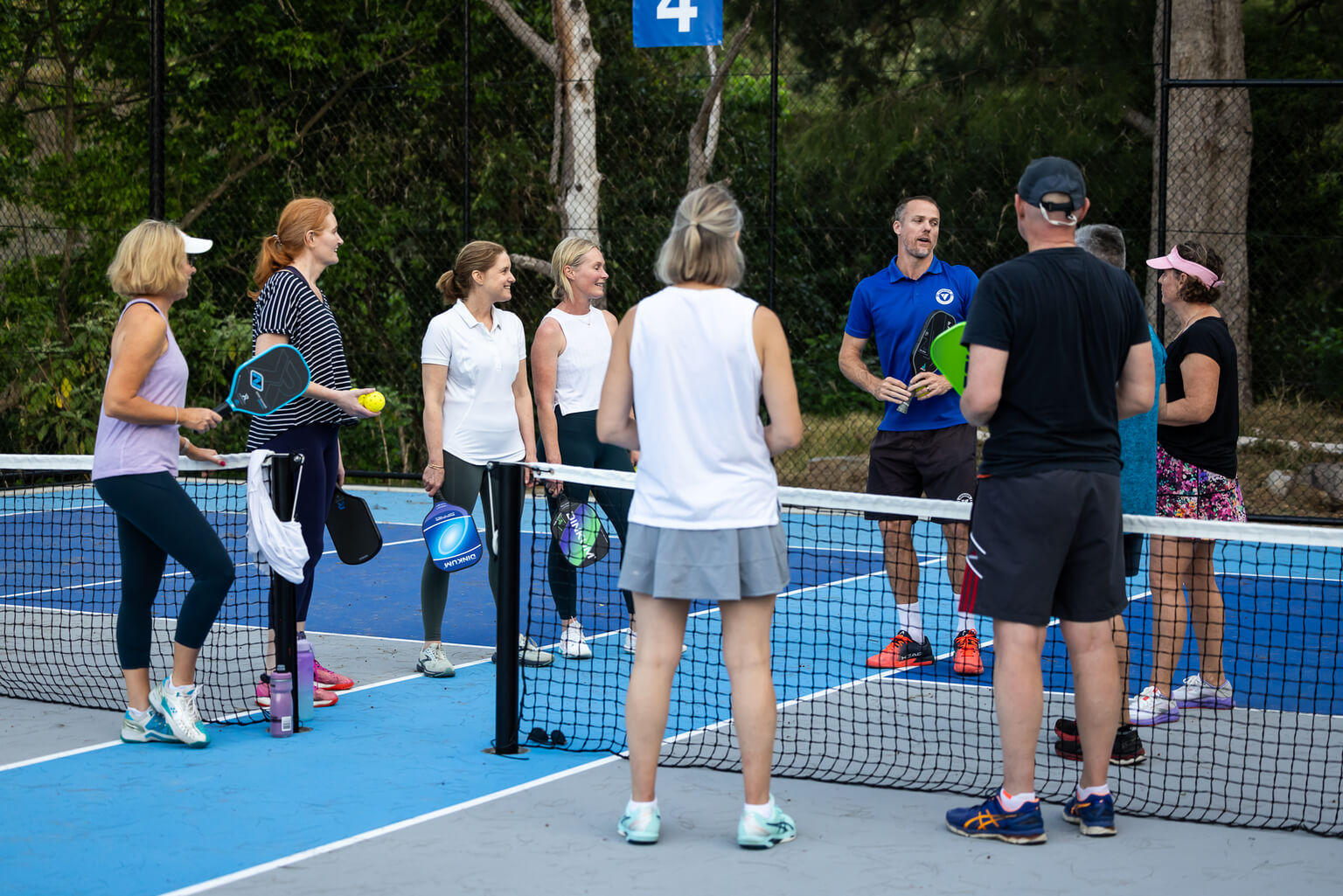
Pickleball is easy to start playing. Improving your game is a different challenge.
After a few social games, most players become comfortable with the basic rules and begin putting together longer rallies. Then certain problems start appearing. A serve that works one day disappears the next. Players get caught in awkward positions. The ball keeps popping up at the kitchen, or opponents seem to find open spaces before there’s time to react.
Playing more games will provide experience, but experience alone doesn’t always show a player what needs to change.
That’s where pickleball lessons can make a difference. A coach can identify problems that are difficult to notice from inside a rally and give players a clearer idea of what to work on between sessions.
Good Technique Gives You More Options
When someone first starts playing pickleball, simply getting the ball over the net feels like progress. As rallies become faster and opponents become more consistent, technique starts to matter more.
Small details can affect how much control a player has over the ball. Grip, preparation, contact point and balance all influence what happens next.
Without feedback, players can repeat the same movement hundreds of times without realising why a particular shot remains unreliable.
A coach can spot those details and suggest adjustments. That doesn’t mean rebuilding every stroke from scratch. Often, a relatively small change can make a shot feel more comfortable and repeatable.
The aim isn’t to develop picture-perfect technique. It’s to give players shots they can trust when a match becomes difficult.
Pickleball Lessons Make Practice More Focused
There is a big difference between hitting a lot of balls and practising with a purpose.
Imagine a player struggling with third-shot drops. During a casual game, they may only get a handful of opportunities to try the shot. If it doesn’t work, the rally ends and everyone moves on.
A coaching session creates time to work specifically on that situation.
The player can repeat the shot, receive feedback, make an adjustment and try again. Once it becomes more comfortable, the coach can introduce movement or point-based situations that make the exercise closer to a real match.
The same approach can be used for serves, returns, volleys, dinks and other areas of the game.
Instead of leaving the court thinking, I need to get better, the player leaves knowing what they need to practise.
Positioning Can Change a Rally Before You Hit the Ball
Not every pickleball problem comes from the way someone strikes the ball.
Sometimes the bigger issue is where they’re standing.
A player might stay near the baseline for too long, rush through the transition area or leave unnecessary gaps between themselves and their doubles partner. These decisions can make otherwise solid shots much harder to play.
Positioning can be particularly difficult to learn independently because players naturally watch the ball rather than themselves.
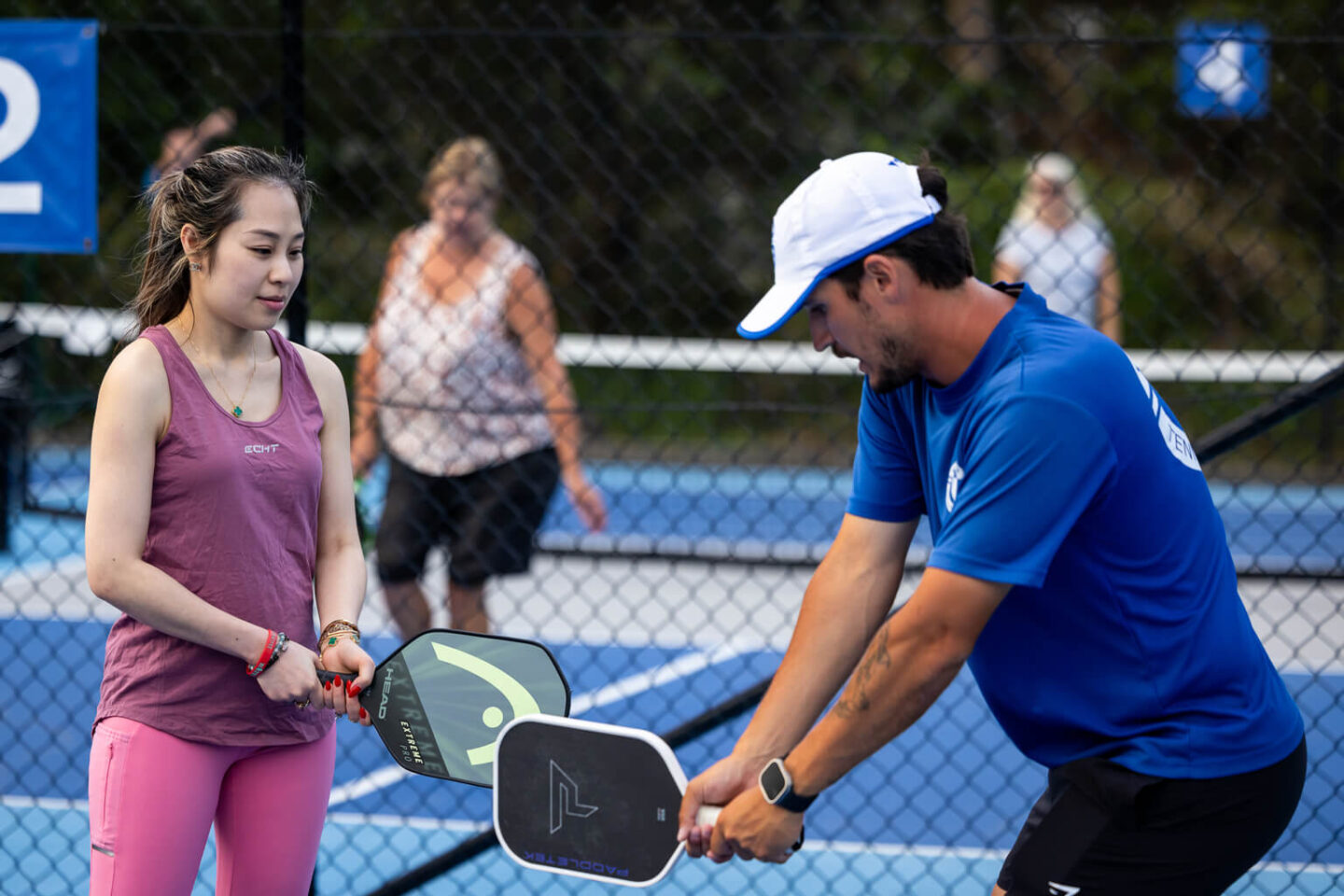
Pickleball coaching gives players another perspective. A coach can stop a drill, explain what happened and show how a different court position could create an easier next shot.
As players become more aware of spacing and movement, they may find they don’t need to hit harder to create better opportunities.
Learn Why a Shot Works, Not Only How to Hit It
Knowing how to play a drop is useful. Knowing when to play one is another skill entirely.
Pickleball involves constant decisions. Should the player attack this ball or reset the rally? Where should the return go? Is there an opening, or would another patient shot be the better choice?
This is where coaching moves beyond technique.
During pickleball lessons, players can work through common match situations and start understanding the purpose behind different shots. Rather than choosing a shot simply because they know how to hit it, they begin considering what they want that shot to achieve.
That tactical understanding becomes increasingly important as opponents improve. Better players tend to punish poor decisions, even when the shot itself is technically sound.
A Coach Can Spot Patterns You Might Miss
Players don’t see their own game the way someone watching from outside does.
A mistake that feels random may actually be happening repeatedly.
Perhaps a player’s return gets shorter whenever they’re under pressure. Maybe they back away from the kitchen line when the rally speeds up. Their paddle position might drop between volleys, leaving them late on the next ball.
A coach can identify those patterns.
This feedback is one of the main advantages of structured pickleball coaching. Instead of guessing which part of the game needs attention, players can concentrate on areas that are actually affecting their performance.
That can make practice more efficient, particularly for adults who only have a limited amount of time available each week.
Beginners Can Build Better Habits From the Start
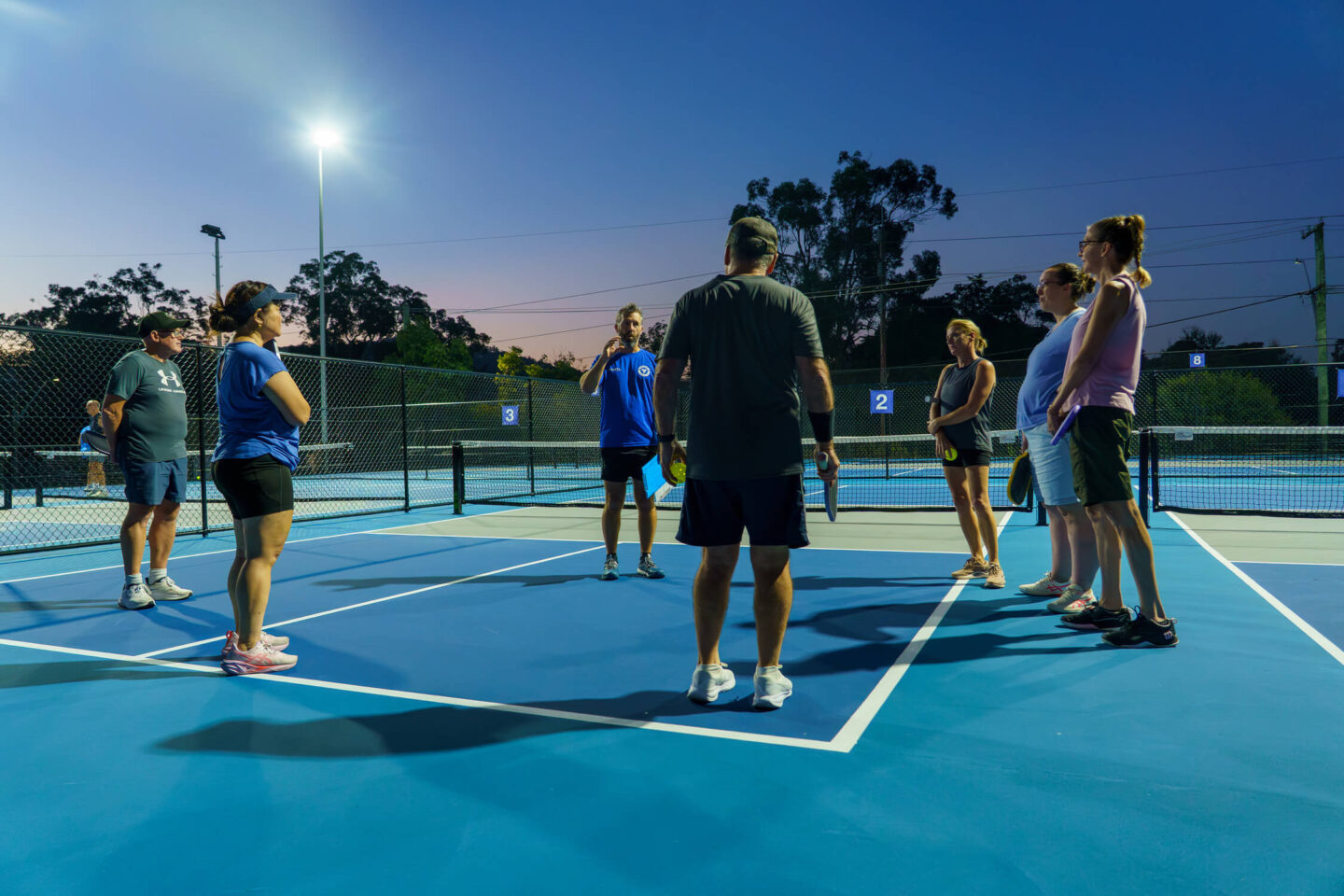
Players don’t need to wait until they’ve been playing for months before considering coaching.
For someone completely new to pickleball, lessons can provide a structured introduction to the game. Beginners can learn basic strokes, scoring, court positioning and rules while becoming comfortable with how points are played.
Early coaching can also help prevent awkward habits from becoming deeply ingrained.
More importantly, beginners have someone available to answer the questions that inevitably appear during the first few sessions. Where should they stand after serving? When can they enter the non-volley zone? How does doubles rotation work?
Understanding those basics can make the first few social games much less confusing.
Experienced Players Still Have Plenty to Work On
Improvement doesn’t stop once someone can rally confidently.
As the level rises, the details often become smaller.
An experienced player might work on disguising an attack, improving the quality of a reset or choosing better targets during doubles. They may already understand what they should do but struggle to execute it consistently when a match speeds up.
Coaching can become more specific at this stage.
Rather than covering the fundamentals, sessions can focus on individual weaknesses, tactical patterns or situations a player regularly encounters in competition.
The goal isn’t necessarily to change everything. It may be to find the one or two adjustments that make the player’s existing game more effective.
Coaching and Match Play Work Best Together
Pickleball lessons shouldn’t replace playing matches.
Players need rallies, unfamiliar opponents and competitive situations to discover whether the things they’ve practised hold up when points become unpredictable.
Coaching and match play can complement each other.
Lessons provide an environment to isolate a skill, understand a tactical idea and repeat it. Matches then test whether the player can recognise the right moment to use it.
Those matches often reveal the next thing to work on.
A player might spend a lesson improving returns, use them successfully during social play and then realise their next problem is getting from the baseline to the kitchen. That becomes the focus for another session.
Improvement develops through that cycle of learning, playing and adjusting.
Spend Less Time Guessing About Your Game
There isn’t a shortcut that turns someone into an accomplished pickleball player overnight. Improvement still requires court time, repetition and plenty of mistakes along the way.
What pickleball lessons can provide is direction.
Instead of repeatedly practising something that isn’t working, players receive feedback. Instead of wondering where they should stand, they can learn the reasoning behind better positioning. Instead of simply hitting more balls, they can practise situations that relate directly to their game.
For beginners, that can make the early stages of learning less confusing. For regular and competitive players, it can uncover details that have been holding their game back.
Players interested in developing their game can explore Voyager’s pickleball programs and find opportunities to learn, practise and play.
Share This
Related Posts